
Monthly Archives: August 2011

Gray Issues Part 5 – Standards, not Legalism

by Elder Peter Lim

If you’ve read Parts 1 – 4 (part 1, part 2, part 3, part 4) of this series, you hopefully understand my heart behind this subject…that it’s not a simply a matter of trying to define where lines ought to be drawn. I think we can move on to another aspect of this subject that may help us to understand how things fit together.

First, some definitions from dictionary.com:

Legalism

  • strict adherence, or the principle of strict adherence, to law or prescription, especially to the letter rather than the spirit.
  • in Theology: 1) the doctrine that salvation is gained through good works, 2) the judging of conduct in terms of adherence to precise laws.

Standards

  • those morals, ethics, habits, etc., established by authority, custom, or an individual as acceptable.

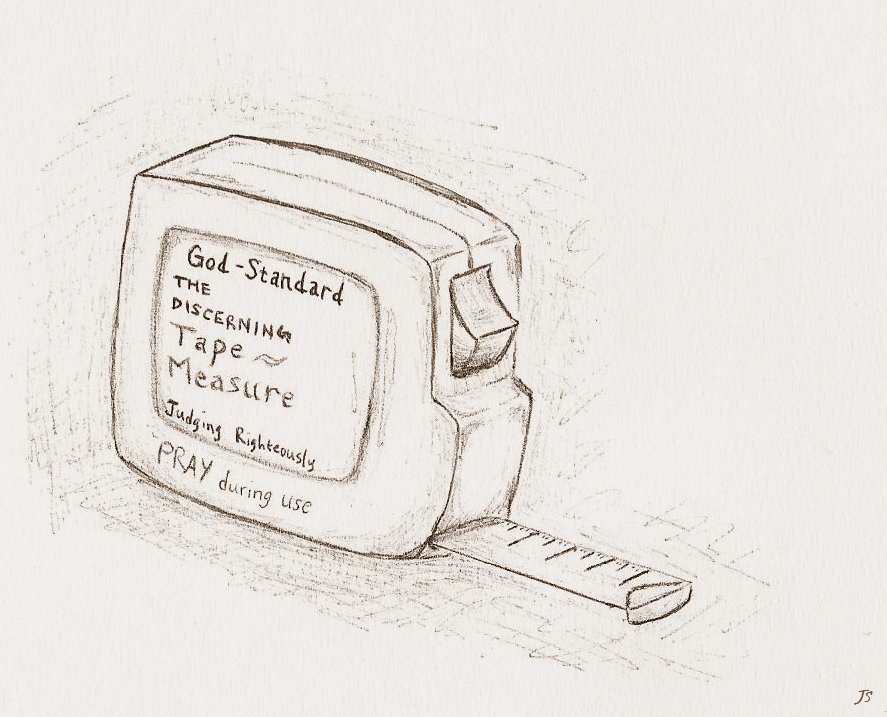
Legalism is generally considered to be a bad thing and should be avoided since it produces arrogance and heartless adherence to behaviors. Jesus Himself condemned legalistic behavior, especially in His chastisement of the Pharisees. Paul treats this topic in detail in his letter to the Romans in chapter 2. It would be helpful to read this chapter carefully before continuing here. Judging others sounds bad (Rom. 2:1, Matt. 7:1) but judgment itself is not necessary bad (Rom. 2:2, 1 Cor. 11:13). It is good when it is determined using God’s standards rather than man’s. This is also known as “discernment” or “righteous judgment” and is indispensible for people, Christian or not. Bad judgment is known as being “judgmental” and should be avoided because it disregards God’s righteous judgment.

Standards, on the other hand, are generally good. Jesus Himself sets standards, such as in the Beatitudes (Matt. 5). More germane to our discussion, the writer of Hebrews commands us to obey our leaders (Heb. 13:17). What are we to obey? Don’t we already know that we are to obey what the Bible has to say? In context, this passage is talking about the subjective moral, ethical, habitual conduct established by the leaders of the church (Heb. 13:7). These are standards. Of course the leaders are not to establish strange teachings as though they are on equal footing with God’s Word (Heb. 13:9). The congregation is to pray for their leaders to be accountable to God not to overextend their authority (Heb. 13:18).

Let’s summarize some thoughts that we have so far:

  1. It is the responsibility of every Christian to please God in all respects.
  2. It is the responsibility of the elders of the local church to set the example for the rest of the church.
  3. It is the responsibility of the members to obey their leaders.
  4. The pastor-teacher must be faithful to preach what he believes is the correct interpretation/application of Scripture.
  5. What the pastor teaches may not necessarily be completely agreeable to all Christians, even the other elders, since people are different.
  6. Leaders must be careful not to lord over the sheep under their oversight.

If anyone in the congregation feels that the leaders are being unreasonably restrictive to their Christian liberties, they should voluntarily leave peacefully and not cause divisions nor grumble nor complain. It would be displeasing to God for them to remain within the congregation and subvert the authority of the leaders of the church that God has established. This is especially true with respect to gray issues. Although we have the same Word of God, each church and each individual will have their own set of standards. I do personally and I know you do too. But most people don’t think about the fact that there are standards which are set by the leaders of the church. These can be frustrating to people who don’t understand that biblically, the leaders have the authority and the responsibility to do this. Furthermore, these standards are often vague and unwritten. These factors combined cause some of the interesting dynamics which exist at every church. Typically, leaders try to set some sort of standard of behavior because they are trying their best to follow God with their lifestyles while trying to deal with the differences among themselves. The rest of the congregation either don’t care what the church’s standards are since they’re busy trying not to violate the clear sins as explicitly prohibited by the Bible, or they try to follow their favorite leader, all the while being careful not to be legalistic.

As an Elder here at Lighthouse Bible Church, I understand that I must not be legalistic in how I live nor in how I judge others in the lifestyles they choose unless it’s sin. However, it is my responsibility to be the best example that I can be in order to help them to grow. Because sin is so hideous to God, I must voluntarily stay away from both sin and the appearance of sin. I must seek to be above reproach even in areas that I believe are not necessarily sin, if it may cause others to stumble. In the end, we all try to do our best to please God with every aspect of our lives and devote ourselves to the furtherance of the gospel because ultimately that’s what we’re here for: to live for God and to spread the gospel of the saving grace of God.

Thy Love to Me Was Wonderful

by Charles Haddon Spurgeon

From 2 Samuel 1:26

Come, dear readers, let each one of us speak for himself of the wonderful love, not of Jonathan, but of Jesus. We will not relate what we have been told, but the things which we have tasted and handled-of the love of Christ. Thy love to me, O Jesus, was wonderful when I was a stranger wandering far from Thee, fulfilling the desires of the flesh and of the mind. Thy love restrained me from committing the sin which is unto death, and withheld me from self-destruction. Thy love held back the axe when Justice said, ‘Cut it down! why cumbereth it the ground?’ Thy love drew me into the wilderness, stripped me there, and made me feel the guilt of my sin, and the burden of mine iniquity. Thy love spake thus comfortably to me when, I was sore dismayed-‘Come unto Me, and I will give thee rest.’

Oh, how matchless Thy love when, in a moment, Thou didst wash my sins away, and make my polluted soul, which was crimson with the blood of my nativity, and black with the grime of my transgressions, to be white as the driven snow, and pure as the finest wool. How Thou didst commend Thy love when Thou didst whisper in my ears, ‘I am thine and thou art Mine.’ Kind were those accents when Thou saidst, ‘The Father Himself loveth you.’ And sweet the moments, passing sweet, when Thou declaredst to me ‘the love of the Spirit.’ Never shall my soul forget those chambers of fellowship where Thou has unveiled Thyself to me. Had Moses his cleft in the rock, where he saw the train, the back parts of his God? We, too, have had our clefts in the rock, where we have seen the full splendours of the Godhead in the person of Christ. Did David remember the tracks of the wild goat, the land of Jordan and the Hermonites? We, too, can remember spots to memory dear, equal to these in blessedness. Precious Lord Jesus, give us a fresh draught of Thy wondrous love to begin the month with. Amen.

2.1p

Weekly Links (8/26/2011)

Sometimes, in trying to come to terms with Jesus command to go and make disciples of all nations, we ask “Well, everybody go?” Does that mean if you’re not a missionary you’re a second-class citizen? How does the church obey the Great Commission? And the way I’ve put it, there are three kinds of people: there are the goers, there are the senders, and there are the disobedient. (John Piper)

by Stephen Rodgers

Since the last two Weekly Links were absolute doozies (doozies: plural of doozy…it’s a technical term), I’d like to give you some extra time to explore and enjoy those resources without overloading you with additional links.  While you’re doing that though, enjoy the quote from John Piper, don’t forget that the Czech team will be giving their missions report this Sunday, and feel free to poke around in the category for missions if you want to review some material from past years.  And while I don’t believe that the pictures from this year are up yet, you can find albums from past years on the SmugMug site quite easily.

See you Sunday!

Pro Rege

Youth Retreat Recap

by Roger Alcaraz

Long drives, late nights, early mornings, fun games, adventurous days, and plenty of time in God’s word. That sounds like the perfect ingredients to our latest youth retreat. To anyone wondering where all our teenagers were a few Sundays ago, no, there wasn’t a Justin Beiber concert. We had much greater plans.

Our destination was UC Santa Barbara which ended up being a 5 hour drive…one way. Why so far away? It was to reveal our big surprise. When we all arrived, everyone went into one of the rooms for a “meeting” when suddenly, out popped the LBCSJ youth ministry! Everyone was super excited to see each other and after all the commotion, everyone was ready for the first of four messages from JR and myself.

The theme of the retreat was “Set Apart.” To be set apart is what it literally means to be holy. Our studies took us from how Christians are set apart to why they’re set apart, and for what they’re set part—going from theology to practice. The first message was titled, “Set Apart by God, For God, and Because of God,” and it focused on how without God, there is no reason or motivation to be holy because he is the one who chooses people to be holy, Christians are to be holy for God’s glory and because he is holy himself.

The rest of the messages spoke on what ways the Christians is to be set apart in, namely evangelizing, good works, and suffering. It’s safe to say that the call to be holy is a high calling that every Christian has received and yet continues to falls short, but we were encouraged to see examples in Scripture of people seeking to live as the shining lights to the world.

Aside from the messages and small groups, the weekend had its share of play time. We learned a fun game called Spool that involves a lot of running back and forth across a pool table. We also played a new version of volleyball involving huge water balloons and a blanket as teams try to fling the balloon over the net while the other tries to catch it with their blanket. We had extra water balloons so, naturally, we started a water balloon fight! Sopping wet, we walked 50 yards to the beach and split into two teams for a new game, “Build a Pastor.” Each team would build a sand body of either JR or me and were judged according to creativity, accuracy, and presentation.

The winning team and their life-like sand body, complete with dry seaweed for hair.

We also enjoyed plenty of time fellowshipping in the dorms, eating at the all-you-can-eat UCSB dining hall, singing songs, and touring the beautiful UCSB campus. Our last night there, we stayed up doing some memorable improvisational acting and performing in an “Untalent Show.” Actual talent was optional as we got to witness amazing, singing, choreography, clapping, gleeking, and knuckle walking. Who knew we had such a talented youth group?

All this is to say we had a great youth retreat, drawing closer to God and to one another. How much greater can it get?

The Glorious Gospel (Part 2)

by Pastor Patrick Cho

A few years ago, a friend of mine had an interesting encounter with an individual while trying to share the gospel. This person simply couldn’t accept the fact that my friend was telling people they were sinners. She adamantly disagreed and was offended that my friend didn’t believe that people were generally good at heart. Her position is commonly accepted by many. Most people would argue that the human spirit is something worth believing in. They contend that people are generally good by nature. We might mess up and make mistakes from time to time, but that doesn’t take away from the general goodness within each person.

Few people would argue that they are perfect, that they have never done anything wrong. Most people understand that every person is guilty of some sin in their life. That is not what is so offensive when sharing the gospel. People aren’t upset about having to admit that they have done wrong. The problem lies in the fact that the Bible doesn’t describe the problem of sin by indicating that people have committed a few wrongs in their lives. The Bible explains that by nature, all people are sinners. It is not just the fact that people have sinned. Sinner is their identity. People sin because of who they are and because of the condition of their hearts.

This is what people are so reluctant to accept. They don’t want to believe that by nature they are wicked people who are in open rebellion against God, and that sin taints everything they do, say, and think. When you believe that there is some good in a person, you believe that they are capable of choosing good. But when you believe that a person is sinful by nature, it necessitates that sin affects everything they do because everything they do stems from who they are.

The Bible begins by demonstrating that people do not choose God. Jesus told His disciples quite clearly that no one would comes to Him unless the Father draws them (John 6:44). Left to ourselves, no one would volunteer to pursue God. It is not in our nature to do so. We are naturally inclined to turn from God and run from Him. Wherever He is, is where we least want to be. This was the Apostle Paul’s conclusion as well. No one seeks after God (Rom. 3:11-12). This means that we are content with living for ourselves. Rather than recognizing and submitting to God as Lord of our lives, we seek to be sovereign and to live for ourselves. We refuse to subject ourselves to Him and would rather choose to live for lesser things. All of this is because of our nature as sinners. We do not choose the greatest good, which is God, but turn to the things of the world that pale in comparison.

Not only do people refuse to choose God, the Bible teaches that because of our sin nature, we also aren’t able to choose God. Even if we weren’t dead set against God volitionally, we would not be able to turn to Him anyway. This is because our sin renders all of us spiritually dead (Eph. 2:1). We are completely incapable of doing anything that would merit us favor with God. Just as dead people don’t talk, move, or think, so also the person who is spiritually dead is completely impotent and incapable of doing any spiritual good. The Bible teaches that it is impossible to please God without faith (Heb. 11:6), and that faith is a gift of God’s grace (Eph. 2:8-9). Without the grace of God to change our hearts, we would not be able to turn to Him in faith.

So people are dead set against God and are completely incapable of choosing Him, but the condition of sinful men is even more severe. The Bible explains that people also do not know how to choose God. If we had the desire to pursue Him and even the ability (and we certainly don’t!), we still would not have the understanding to do so. This is because our understanding is darkened because of our sin (Eph. 4:17-19). We are utterly spiritually blind (John 12:40; 2 Cor. 4:4; 1 John 2:11). We would grope around in the darkness and if our hope was even dangling a few feet in front of us, we would not know.

The truth is that the Bible paints a very bleak picture of the condition of men. We are sinners by nature and act consistently with who we are. What is the greatest problem in the world? We are. Our sin affects us to the core so that we cannot live as God originally intended, to walk in righteousness and in right relationship with Him. We cannot please Him. We cannot earn our way into heaven. Our sin stains us and makes us unclean, and God cannot dwell with what is unclean. If we are to have any hope of being made right with God, we must first be cleansed. Since we don’t have the capability of cleansing ourselves, we need someone else to cleanse us.

This is where the hope of the gospel comes in and what Christ came to accomplish. By dying on the cross, He took on the sins of the world so that anyone who would trust in Him could be cleansed of the guilt and stain of sin. But in order to receive this salvation, one must first acknowledge the need for it. We must confess with God’s Word that we are sinners and have no hope in ourselves to change our condition. We are completely dependent upon God to save us. Salvation is His work and accomplished by His grace. We can’t do it and we certainly don’t deserve it, but He offers it to us because of His great love (John 3:16; Rom. 5:8). In order to understand the good news, it is essential that you first understand the bad news. In order to be saved, you need to realize your need for a Savior. We must first be honest about ourselves and confess our hearts’ sin condition.

They Shall Sing in the Ways of the Lord

by Charles Haddon Spurgeon

From Psalm 138:5

The time when Christians begin to sing in the ways of the Lord is when they first lose their burden at the foot of the Cross. Not even the songs of the angels seem so sweet as the first song of rapture which gushes from the inmost soul of the forgiven child of God. You know how John Bunyan describes it. He says when poor Pilgrim lost his burden at the Cross, he gave three great leaps, and went on his way singing-

‘Blest Cross! blest Sepulchre! blest rather be
The Man that there was put to shame for me!’

Believer, do you recollect the day when your fetters fell off? Do you remember the place when Jesus met you, and said, ‘I have loved thee with an everlasting love; I have blotted out as a cloud thy transgressions, and as a thick cloud thy sins; they shall not be mentioned against thee any more for ever.’ Oh! what a sweet season is that when Jesus takes away the pain of sin. When the Lord first pardoned my sin, I was so joyous that I could scarce refrain from dancing. I thought on my road home from the house where I had been set at liberty, that I must tell the stones in the street the story of my deliverance. So full was my soul of joy, that I wanted to tell every snow-flake that was falling from heaven of the wondrous love of Jesus, who had blotted out the sins of one of the chief of rebels. But it is not only at the commencement of the Christian life that believers have reason for song; as long as they live they discover cause to sing in the ways of the Lord, and their experience of His constant lovingkindness leads them to say, ‘I will bless the Lord at all times: His praise shall continually be in my mouth.’ See to it, brother, that thou magnifiest the Lord this day.

‘Long as we tread this desert land,
New mercies shall new songs demand.’

Weekly Links (8/18/2011) – Tabletalk Edition

by Stephen Rodgers

Welcome to a slightly different edition of the Weekly Links.  I did something similar with a topical index of the 9Marks eJournal a while back, and we got some very positive feedback.  So this time instead of a topical index it’s going to be a chronological index, and instead of the 9Marks eJournal, let’s focus on Ligonier Ministries’ Tabletalk.

I’ve highlighted Tabletalk here on the Beacon for years now…it’s even part of our recommended resources catalog.  If you’d like more information about the magazine, I’d encourage you to check out their website.  And if you hadn’t read it before now…you’re in for a treat!

Tabletalk Issues:

Sonlight 2011-2012: To Be Like Jesus

by Abram Kim

The start of the new year brings a lot of anticipation, change, and excitement. The start of the Sonlight year is no different. About half the staff from last year have stepped down for various reasons (i.e., moving away, other ministries, etc.). New staff will join soon, but will take some time for them to be trained. Two of our most faithful kids (Katie and Jordyn ) have moved on to the youth group, Lumos. Five kids (Melody, Tyrone, Noah, Abby, and Kasey) have moved up from the preschool group, Sparklers. Amidst all the change, the Sonlight ministry, which serves Kindergarten through 5th grade, remains steadfast because the Word of God remains steadfast and unchanging. Just like in every other ministry at church, the Bible is the final authority for Sonlight in all things pertaining to life and godliness (2 Peter 1:3).

This year we have a new curriculum from Children Desiring God, called “To Be Like Jesus.” The curricula from Children Desiring God have been consistently faithful to the Scriptures, and for the most part aligned with the teaching at Lighthouse. We anticipate the same level of faithfulness this year, all the while remembering that the curriculum itself is not inspired, only the Bible is inspired.

This year’s curriculum will cover the biblical message of the gospel, and in particular, what it means to call yourself a Christian. This is an appropriate topic for our Sonlight kids who are growing in their knowledge of the God, Jesus, and the Bible. I can personally attest as one who has grown up going to church all my life that knowing the facts of the gospel and having those facts effect my life were two completely different, yet obviously connected, realities. As the stories and teachings of the Bible begin to formulate in the young minds of the children in Sonlight, we as a staff will challenge and encourage them this year to consider the fruit in their lives to really evaluate whether or not they have true saving faith. Our Lord said the world will know His own by their fruit and practice (Matthew 7:15-27). Being a Christian is so much more than assenting to a set of facts and ideas. Being a Christian includes a total life change. Once we were slaves to sin, which leads to death. Now we are slaves to Christ, who ransomed us with a very costly and precious price, His own blood. Only then can eternal life be assured and secured. Only a few find it. We pray all the children in Sonlight are part of that few.

Church Plant Interviews – Hub Post

by Stephen Rodgers

This is the hub post for Richard Shin’s nine-part series of interviews regarding the San Jose church plant. From this page, you can easily find and refer to all posts in this series.

All posts in the Church Plant Interviews series: