Author Archives: Stephen Rodgers

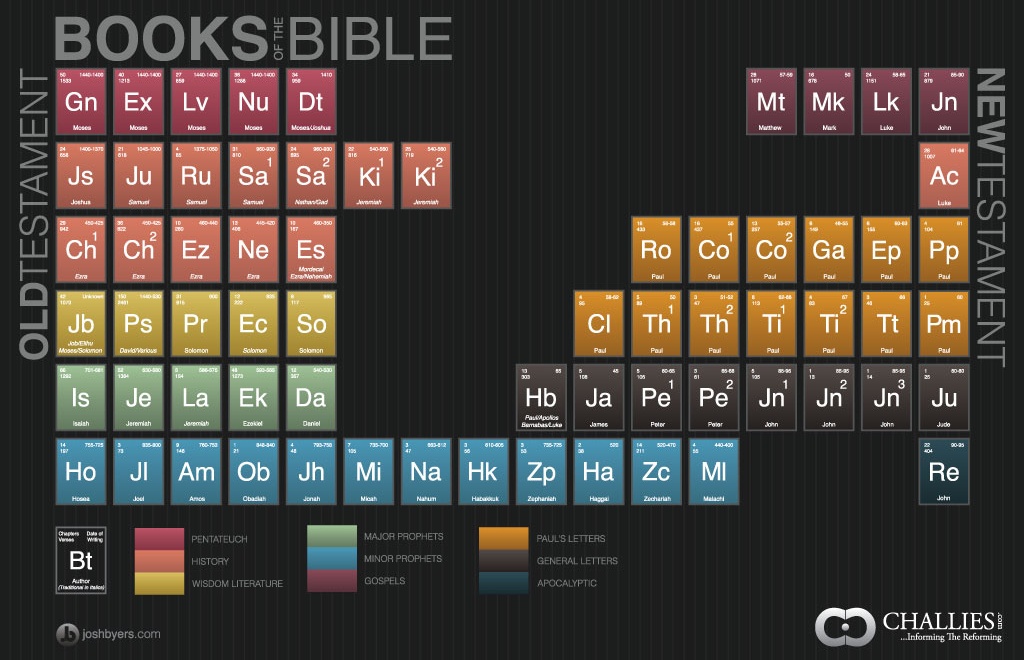
BOB – Hub Post

by Stephen Rodgers

Editor’s Note: The BOB series is still ongoing, but currently is taking a bit of a break, with the hope of resuming in early 2013. Until then, please enjoy this Hub Post for the OT books, and stay tuned for some upcoming announcements and improvements to the series itself.

Introduction

The Bible

The OT Canon

The OT Books

The Pentateuch

History

Wisdom

Major Prophets

Minor Prophets

Outlines

Other

The Apocrypha

The NT Canon

The NT Books

The Gospels

  • Matthew
  • Mark
  • Luke
  • John

History

  • Acts

The Epistles

  • Romans
  • 1 Corinthians
  • 2 Corinthians
  • Galatians
  • Ephesians
  • Philippians
  • Colossians
  • 1 Thessalonians
  • 2 Thessalonians
  • 1 Timothy
  • 2 Timothy
  • Titus
  • Philemon
  • Hebrews
  • James
  • 1 Peter
  • 2 Peter
  • 1 John
  • 2 John
  • 3 John
  • Jude

Prophecy

  • Revelation

Conclusion

With Lovingkindness Have I Drawn Thee

by Charles Haddon Spurgeon

From Jeremiah 31:3

The thunders of the law and the terrors of judgment are all used to bring us to Christ; but the final victory is effected by lovingkindness. The prodigal set out to his father’s house from a sense of need; but his father saw him a great way off, and ran to meet him; so that the last steps he took towards his father’s house were with the kiss still warm upon his cheek, and the welcome still musical in his ears.

‘Law and terrors do but harden
All the while they work alone;
But a sense of blood-bought pardon
Will dissolve a heart of stone.’

The Master came one night to the door, and knocked with the iron hand of the law; the door shook and trembled upon its hinges; but the man piled every piece of furniture which he could find against the door, for he said, ‘I will not admit the man.’ The Master turned away, but by-and-bye He came back, and with His own soft hand, using most that part where the nail had penetrated, He knocked again-oh, so softly and tenderly. This time the door did not shake, but, strange to say, it opened, and there upon his knees the once unwilling host was found rejoicing to receive his guest. ‘Come in, come in; thou hast so knocked that my bowels are moved for thee. I could not think of thy pierced hand leaving its blood-mark on my door, and of thy going away houseless, ‘Thy head filled with dew, and thy locks with the drops of the night.’ I yield, I yield, Thy love has won my heart.’ So in every case: lovingkindness wins the day. What Moses with the tablets of stone could never do, Christ does with His pierced hand. Such is the doctrine of effectual calling. Do I understand it experimentally? Can I say, ‘He drew me, and I followed on, glad to confess the voice divine?’ If so, may He continue to draw me, till at last I shall sit down at the marriage supper of the Lamb.

2.29a

Weekly Links (11/2/2012)

What is our only hope in life and death?

That we are not our own but belong, body and soul, both in life and death, to God and to our Savior Jesus Christ. (New City Catechism, Q1)

by Stephen Rodgers

I’m going to try to structure this a bit differently today…we’ll see how it goes.

FEATURED RESOURCE

Not everyone is familiar with the word, so it might be helpful to begin with the fact that Google defined “catechism” as follows:

  1. A summary of the principles of Christian religion in the form of questions and answers, used for the instruction of Christians
  2. A series of fixed questions, answers, or precepts used for instruction in other situations
Nowadays, catechisms are largely forgotten in American Christendom, despite the fact that they were once the primary tool for educating both children and new converts in theological matters. That’s one of the reasons that I’m so excited by the fact that The Gospel Coalition (TGC) teemed up with Redeemer Presbyterian Church (of Tim Keller fame) to produce the New City Catechism. And for what it’s, worth, I’m not the only one who’s excited.

Compared to some of the other catechisms, it’s considerably shorter: just 52 questions and answers, one for each week of the year. And it tries to claim the difficult-to-occupy middle ground between a child’s catechism (A Catechism for Boys and Girls, Catechism for Young Children, First Catechism) and the more well-known but difficult adult’s catechisms (Westminster Shorter, Westminster Larger, Heidelberg, etc.). It does this by having two answers to each question: a simple/short one for the child, and an expanded one for the adult/parent.

More information can be found here:

OTHER RESOURCES

  • The free audiobook from christianaudio.com for November is Kevin DeYoung and Greg Gilbert’s What is the Mission of the Church? For anyone at LBC, that’s pretty much a no-brainer.  Enjoy!
  • 9Marks recently did a series of talks at Southern Seminary on the topic of “conversion.”
  • The new Tabletalk issue is on the topic of “The 5 Solas.” If you want to see what the previous topics were, I’ll plug my index once again.
  • Last but not least, Ligonier Ministries is giving away their “Luther and the Reformation” series, which is pretty incredible.

NEW AWESOMENESS

ONGOING AWESOMENESS

  • I’ve hyped RefNet before, but if you haven’t checked it out yet, you might want to see their new weekend lineup.
  •  Tim Challies has a new article in his “Essential” series on the doctrine of election.

That’s it…hopefully you made it through all that. See you Sunday!

Pro Rege

Youth Staff Introductions

by Josh Liu

It has been a little over a month and a half since Lumos Youth Ministry resumed for this academic year. While transitions present inherent difficulties, I believe I can speak on behalf of at least the youth staff and say that it has been an exciting time of relationship-building and fellowship through the study of God’s Word! By God’s grace, many things mentioned in my last post have been realized: Cesar and I have begun a preaching series on 1 John and Romans, respectively (we hope to post recorded sermons online soon!); we had our first Gospel night on October 5, where I had the opportunity to preach on Matthew 6:19-24 and remind the youth about the hopelessness in earthly treasures, and the surpassing value of knowing Christ Jesus as Lord (Phil. 3:8); staffers have been graciously hosting study hall on Thursdays; and we had our first game night on October 14! We are nearing the end of the planning stages for Saturday Seminars, youth retreats, and other events. All of these opportunities provide wonderful times of fellowship, instruction, and discipleship. Each youth staffer passionately serves and genuinely cares for each youthie; they remind me of Paul’s discipleship ministry to the Thessalonians (1 Thess. 2:8). Therefore, I want to highlight each youth staffer by allowing them to introduce themselves:

CESAR VIGIL-RUIZ

My name is Cesar Vigil-Ruiz and am an intern at LBC. I work part-time at The San Diego Squash Club and have recently completed my undergraduate studies at UCSD. I came to Lighthouse when a former member invited me while I was involved with an on-campus ministry. Later, I realized God used His Word to save me during my sophomore year in college. I became a member in 2006 to fulfill part of the Great Commission and grow as a committed follower of Jesus Christ.

Some of my hobbies include, running, reading, hiking, playing chess, and soccer. My favorite food is tacos from Tacos el Gordo; my favorite ice cream is vanilla; my favorite book is The Holiness of God by R.C. Sproul; my favorite movie is The Dark Knight; and my favorite song is “Face to Face” from Indelible Grace Music.

My favorite verse is 2 Corinthians 5:21, which says, “For our sake he made him to be sin who knew no sin, so that in him we become the righteousness of God.” This verse sums up what came before (2 Cor. 5:11-20), but gives a glimpse into the love of the Father for wicked sinners by making Christ our substitute for sin, that we may be given the righteousness of Christ. This is the most succinct summary of the Gospel I have seen, and it’s from God Himself!

I have been a staffer for Lumos Youth from 2008-2011, and returned after a year with the Singles Ministry. I’m looking forward to what God does in the lives of our youth!

KRISTEN LIM

Hi! My name is Kristen Lim and I am a sophomore at UCSD, currently studying Computer Science. I was born and raised in Austin, Texas, then moved to San Diego when I was entering the 8th grade (2006) and started attending Lighthouse since then. In my free time I love baking/eating yummy treats (my favorites being anything pumpkin or banana or cinnamon), running, playing music (flute and guitar), and spending time with friends and family. One of the reasons why I love music and singing meaningful songs is because of how they can remind my soul of God’s truths and promises. A song that I have been listening to on repeat recently is “God is God” by Steven Curtis Chapman (haha, an oldie but a goodie), which speaks of God’s bigness and holiness, and how as a human I won’t understand everything that goes on in life, but I can rest assure that God is sovereign. Along those lines, a favorite psalm of mine is Psalm 46, underscoring that God is our refuge and strength and that we can take comfort knowing that since God is God, He will be glorified no matter how bleak the circumstances may be.

I am super excited to be part of the Lumos youth ministry, since I was saved under this ministry and grew in my love and fear of the Lord during my time there (and continue to do so after graduating). I desire and pray that God will save the souls of these youth at an early age, that they may serve Him with more vigor and passion than I did when I was their age, and that God may be magnified through their lives.

JOYCE KANG

I first came out to Lighthouse in 2006 and knew that I was here to stay when I heard Pastor John preach through the book of Romans. I became a member soon after and have loved serving in various ministries at our church. In the summer of 2009, I went to the Czech Republic for summer missions and had the opportunity to work closely with the youth. In hindsight, I see how God used that trip to cultivate in me a deeper love for Him, as well as a desire to invest in the youth at our church. What I love most about Lumos is watching the young men and women mature in their understanding of the Gospel and begin to take ownership of their faith.

My hobbies include cooking, baking, reading, and spending time with my friends and family; my favorite Christian book is Choosing to See by Mary Beth Chapman and my favorite Bible verse is 2 Corinthians 12:9.

JEN SHIH

Hello! I’m Jen. By day, I work in a research laboratory to help develop biofuels – actually at a company just around the corner from our church!

God led me to LBC summer of 2008. I remember when I first came to Lighthouse: I attended the Single Life Bible study on Friday nights and was so encouraged during the small group time. Everyone I met was really open to sharing about their walks with God. I could see that there were people here who genuinely loved God and people. I also learned that LBC was very committed to Bible teaching on Sunday mornings. I become a member at the end of that year!

My hobbies include photography and hiking (and taking photos of the plants, flowers and animals on the trail).

I like all kinds of sports like running, surfing, and indoor rock climbing! My favorite ice cream is Pistachio with the actual nuts mixed it. I like it because it’s sweet and salty and the pistachio adds texture. I also have a fondness for cats!! :3

A verse I want to share is Psalm 119:105: “Your word is a lamp to my feet and a light to my path.” I love this short and sweet verse that’s filled with truth about the Truth. The psalmist here recognizes that it’s God’s Word that he needs to guide his feet and light his path in the darkness that surrounds him. I wanted to share this verse with Lumos because as we study the Bible together this year and share life together, I pray that we would develop a deeper understanding of God and His will for our lives! I’m excited to be on staff and to get to know the youth at LBC! Think of me as an older sister and someone that is committed to loving God and you guys!

ELISABETH KO

I came to Lighthouse when my family moved to San Diego. I didn’t really know what to look for in a church, so I just decided to follow my brother and go to Lighthouse. Although I felt very uncomfortable in the beginning because people seemed so holy, it was evident in my eyes how different they were. The Youth staff showed tremendous love towards me (this irresponsible, trouble-making teenager), which softened my heart to see what it means to live like a Christian. Later, I got into UCSD, and my heart was already set on becoming a member here so that I may work alongside fellow believers to bring glory to God.

I enjoy drawing, watching movies, and developing stories.

My favorites are:

  • Favorite dessert: froyo
  • Favorite place: home
  • Favorite ice cream flavor: cookies & cream
  • Favorite animal: wolves & eagles
  • Favorite fantasy animal: werewolves
  • Favorite genre: fantasy & action
  • Favorite color: black & white
  • Favorite fruit: watermelon & peach
  • Favorite bugs: none
  • Favorite movie: depends on when you ask me
  • My favorite verse is Colossians 3:1-2

The staff is here because they love the youth and desire to teach and lead them so that they may know Christ and follow Him in a worthy manner. None of the staff are perfect and they are dependent on God’s mercy and grace to live a Christian life every day. Feel free to ask what we struggle with how God is growing us in those struggles. We’ll be more than happy to share!

BOB – Malachi

by Stephen Rodgers

MALACHI IN 10 WORDS OR LESS

“The Jews are careless in their attitude towards God.”

TITLE

In nearly all the other prophetic books, the name of the book bears the name of the prophet who was responsible for its contents. That certainly could be the case with Malachi, but some have suggested that it might be otherwise despite Mal. 1:1. (See AUTHOR & AUDIENCE).

AUTHOR & AUDIENCE

We know absolutely nothing about Malachi personally, so some scholars have suggested that “Malachi” is not a proper name at all, but rather a literal expression for what it means (“my messenger”). That would make Malachi the only anonymous prophetic book.  The arguments for anonymous authorship typically rely on four points:

  • The word “Malachi” is a title rather than a name in it’s form. In fact, that’s how the writers of the Septuigent translated it.
  • Neither the Targum nor the Talmud credit Malachi as the author; the Targum credited Ezra and the Talmud credited Mordecai.
  • The word “Malachi” appears in Mal. 3:1 and it is definitely a title and not a name in that context.
  • Some have suggested that the entire book is merely an oracle such as Zech. 9-11 and Zech. 12-14.
Those who support Malachi as the author typically refute those arguments as follows:
  • “Malachi” could be a shorted form of “Malachiah” or “Malachiyyah,” which is definitely a proper name. The Bible does contain other examples of such name-shortening (Kings 18:2 / 2 Chr. 29:1; 1 Kings 4:19 / 1 Chr. 11:41).
  • Neither Ezra nor Mordecai are likely authors of the book, so a tradition of ascribing it to them is largely irrelevant.
  • The use of “Malachi” in Mal. 3:1 appears to be a play on words, which can only be the case if Malachi is the name (or a form of the name) of the author.
  • Malachi uses a different introduction than Zechariah; also, other prophets referred to their books as “oracles” (Nah. 1:1; Hab. 1:1)

Also, per Constable:

If Malachi is not the prophet’s name, this would be the only prophetic book in the Old Testament that is anonymous, which seems very unlikely.

On balance, it seems most likely that Malachi is a proper name, and the author of the book.

Malachi was written for the Jews who had returned from exile in Babylon and fallen into a state of spiritual apathy.

DATE

Although we don’t have a precise date for Malachi, we do have a number of clues from the text. Constable has a lengthy but excellent explanation:

Malachi referred to no datable persons or events in his prophecy, so we must draw our conclusions from implications in the text and traditional understandings of it. Malachi’s place at the end of the twelve Minor Prophets in the Hebrew Bible and modern translations argues for a late date. The Talmud grouped Malachi with Haggai and Zechariah as postexilic prophets.[Yoma 9b; Sukkah 44a; Rosh Hashannah 19b; Megillah 3a, 15a, et al.]

Malachi’s reference to “your governor” (1:8) indicates that he wrote after 538 B.C. when Cyrus the Persian allowed the Jews to return to their land, which was under Persian control. The word translated “governor” is pehah, a Persian title (cf. Ezra 5:3, 6, 14; 6:6-7, 13; Dan. 3:2-3, 27; 6:7). Zerubbabel bore this title (Hag. 1:1, 14; 2:2, 21), as did Nehemiah (Neh. 5:14; 12:26). Malachi must have written after the temple had been rebuilt since he referred to worship there (Mal. 1:6-14; 2:7-9, 13; 3:7-10). This would force a date after 515 B.C. when temple restoration was complete.

Since Malachi addressed many of the same matters that Nehemiah tried to reform, it is tempting to date Malachi during Nehemiah’s governorship. Both Malachi and Nehemiah dealt with priestly laxity (Mal. 1:6; Neh. 13:4-9), neglect of tithes (Mal. 3:7-12; Neh. 13:10-13), and intermarriage between Israelites and foreigners (Mal. 2:10-16; Neh. 13:23-28). Some have conjectured that Malachi ministered while Nehemiah was away from Jerusalem.[E.g., Robert L. Alden, “Malachi,” in Daniel-Minor Prophets, vol. 7 of The Expositor’s Bible Commentary, pp. 701-2.] In the twelfth year of his governorship, Nehemiah returned to Persia for an unknown period of time (Neh. 5:14; 13:6). Malachi probably wrote during the years Nehemiah served (445-420 B.C), and perhaps between 432 and 431 B.C., the years when Nehemiah was away from Jerusalem.

Just to reiterate the point, the MSB concurs:

Looking solely at internal evidence, the date of the prophecy points to the late fifth century B.C., most likely during Nehemiah’s return to Persia ca. 433–424 B.C. (cf. Neh. 5:14; 13:6). Sacrifices were being made at the second temple (Mal. 1:7–10; 3:8), which was finished in 516 B.C. (cf. Ezra 6:13–15). Many years had passed since then as the priests had increasingly become complacent and corrupt (Mal. 1:6–2:9). Malachi’s reference to “governor” (Mal. 1:8) speaks of the time of Persian dominance in Judah when Nehemiah was revisiting Persia (Neh. 13:6), while his emphasis on the law (Mal. 4:4) coincides with a similar focus by Ezra and Nehemiah (cf. Ezra 7:14,25,26; Neh. 8:18). They shared other concerns as well, such as marriages to foreign wives (Mal. 2:11–15; cf. Ezra 9,10; Neh. 13:23–27), withholding of tithes (Mal. 3:8–10; cf. Neh. 13:10–14), and social injustice (Mal. 3:5; cf. Neh. 5:1–13). Nehemiah came to Jerusalem in 445 B.C. to rebuild the wall, and returned to Persia in 433 B.C. He later returned to Israel (ca. 424 B.C.) to deal with the sins Malachi described (Neh. 13:6). So it is likely that Malachi was written during the period of Nehemiah’s absence, almost a century after Haggai and Zechariah began to prophesy. Similar to Rev. 2,3, in which Christ writes what He thinks about the conditions of the churches, here God writes through Malachi to impress upon Israel His thoughts about the nation.

BACKGROUND & SETTING

See DATE.

HISTORICAL & THEOLOGICAL THEMES

There are two main themes that pervade the book of Malachi.

  • Israel’s Unfaithfulness. Malachi rebuked the people of Israel for lapsing into unfaithfulness. The priests were offering God second-rate and diseased animals (Mal. 1:6-14), and violating the covenant. The men of Israel were marrying Gentile women and divorcing Israelite wives (Mal. 2:10-16). Everyone was failing to honor God by tithing (Mal. 3:8-12). Malachi reminded them that God demands his people’s best in their service and lifestyle (Mal. 1:7-8).
  • Judgment. God will judge those who practice evil (Mal. 2:17-3:5; 4:1), but save and reward those who honor Him (Mal 3:16-18; 4:2-3).

INTERPRETIVE CHALLENGES

The only interpretive issue in Malachi is the reference to the second coming of Elijah. The MSB explains:

The meaning of Elijah being sent “before the coming of the great and dreadful day of the LORD” (4:5) has been debated. Was this fulfilled in John the Baptist or is it yet future? Will Elijah be reincarnated? It seems best to view Malachi’s prophecy as a reference to John the Baptist and not to a literally-returned Elijah. Not only did the angel announce that John the Baptist would “go before Him in the spirit and power of Elijah” (Luke 1:17), but John the Baptist himself said he was not Elijah (John 1:21). Thus John was like Elijah, internally in “spirit and power” and externally in rugged independence and nonconformity. If the Jews would receive the Messiah, then he would be the Elijah spoken of (cf. Matt. 11:14; 17:9–13); if they refused the King, then another Elijah-like prophet would be sent in the future, perhaps as one of the two witnesses (cf. Rev. 11:1–19).

LITERARY FEATURES

Per the ESVSB:

The content of the book of Malachi places it in the category of prophecy, but the form in which that content is packaged is out of the norm for OT prophecy. The book is written entirely in prose. Further, the material is not embodied in the conventional format of oracles of judgment and salvation. The dominant genre is satire—an attack on vice in a discernible literary form, and with a satiric norm by which the criticism is conducted. The object of attack is halfhearted and negligent religious service, which in the prophet’s day took multiple forms (e.g., inappropriate offerings, untruth promoted by the priests, and the prevalence of divorce). The satiric norm is God’s law. The primary vehicle in which the satire is embodied is a rhetoric of question and answer, as the people of Judah are pictured as asking a series of questions that God answers in an accusatory and condemning way.

OBJECTIONS

There are no objections to Malachi that I’m aware of.

NOTABLE QUOTABLES

  • Malachi 3:1
  • Malachi 4:2

DID YOU KNOW?

  • Malachi would record the last words that God would speak to his people for over 400 years…until the coming of John the Baptist.
  • Marriages to pagan women were forbidden under covenant law, due to the risk of apostasy (Mal. 2:11).

Other Works Referenced

  • Apologetics Study Bible, Malachi”
  • Archaeological Study Bible, “Introduction to Malachi”
  • ESV Study Bible, “Introduction to Malachi”
  • MacArthur Study Bible“Malachi”
  • NET BibleMalachi
  • NIV Study Bible, Malachi
  • Reformation Study Bible, “Malachi”
  • The Baker Illustrated Bible Handbook, “Malachi”
  • Dever, The Message of the Old Testament
  • Driscoll, A Book You’ll Actually Read On the Old Testament
  • Knight, The Layman’s Bible Handbook

The Amazing Journey of Our King

by Elder Mike Chon

When we think about Jesus and his earthly life, we are amazed by everything that He taught and experienced which is recorded in the gospels. Of course, the pinnacle of His earthly life was His death on the cross and His resurrection which gives us salvation and hope for the life to come. As amazing as His earthly life is, it is equally amazing that Jesus was even born to Joseph and Mary. The genealogy of Jesus is written for us in Matthew 1:1-16 as well as Luke 3:23-38 which show us the amazing journey that our King had to take even before his birth.

  • It began with Adam and Eve who turned away from God to follow Satan which resulted in the fall of the whole human race.
  • Then during Noah’s time that the wickedness of man was great (Genesis 6:5) that God decided to bring judgment to the world by sending a worldwide flood that would destroy every man and woman, except for Noah and his family because Noah found favor in the Lord’s eyes (Genesis 6:8).
  • Then there is Abraham who is known as a man of faith, but instead of waiting for God’s timing he has a son with Hagar, his wife’s maidservant.
  • Then we have Judah who was one of the brothers who sold Joseph off to slavery in Egypt.
  • It continues with David who was a murderer and adulterer.

As you follow the genealogy you realize that this isn’t a family line that you would be proud of in worldly standards but it is amazing that God would use these people to be the ones that the King of the world would be associated with in His genealogy.

One thing is certain that God’s wisdom is far greater than ours (Romans 11:33-34). Even though this genealogy may be full of imperfect people, we realize that these are the people that God used to accomplish His will. Even for the most important moment in history God would use these imperfect and sinful people to prepare the way for the birth of Jesus. It was amazing that Jesus would be born through this family line and likewise it is as amazing that God would save us in our sin when we didn’t deserve it so that we can be part of His family. It is encouraging to know that the all-knowing, sovereign God has chosen us before the foundation of this world to be part of His redemptive plan. No matter what background we came from, whether it was of privilege or poverty, whether it was from a Christian home or a broken home, we have been chosen by God to be the person we are today because of His grace and mercy which works in and through us. May God receive all the glory and may we be encouraged that God uses imperfect, weak, and frail men to accomplish His purposes.

The Barrel Of Meal Wasted Not, Neither Did The Cruse Of Oil Fail, According To The Word Of The Lord…

by Charles Haddon Spurgeon

From 1 Kings 17:16

See the faithfulness of divine love. You observe that this woman had daily necessities. She had herself and her son to feed in a time of famine; and now, in addition, the prophet Elijah was to be fed too. But though the need was threefold, yet the supply of meal wasted not, for she had a constant supply. Each day she made calls upon the barrel, but yet each day it remained the same.

You, dear reader, have daily necessities, and because they come so frequently, you are apt to fear that the barrel of meal will one day be empty, and the cruse of oil will fail you. Rest assured that, according to the Word of God, this shall not be the case. Each day, though it bring its trouble, shall bring its help; and though you should live to outnumber the years of Methuselah, and though your needs should be as many as the sands of the seashore, yet shall God’s grace and mercy last through all your necessities, and you shall never know a real lack.

For three long years, in this widow’s days, the heavens never saw a cloud, and the stars never wept a holy tear of dew upon the wicked earth: famine, and desolation, and death, made the land a howling wilderness, but this woman never was hungry, but always joyful in abundance. So shall it be with you. You shall see the sinner’s hope perish, for he trusts his native strength; you shall see the proud Pharisee’s confidence totter, for he builds his hope upon the sand; you shall see even your own schemes blasted and withered, but you yourself shall find that your place of defence shall be the munition of rocks: ‘Your bread shall be given you, and your water shall be sure.’

Better have God for your guardian, than the Bank of England for your possession. You might spend the wealth of the Indies, but the infinite riches of God you can never exhaust.

2.28p

BOB – Zechariah

by Stephen Rodgers

ZECHARIAH IN 10 WORDS OR LESS

“Jewish exiles should rebuild their temple – and anticipate their Messiah.”

TITLE

Like nearly all the other prophetic books, the name of the book bears the name of the prophet who was responsible for its contents (Zech. 1:1). The name Zechariah (“the LORD remembers”) is quite common, appearing in conjunction with 29 other OT men.

AUTHOR & AUDIENCE

Like Haggai and Malachi, Zechariah is one of the post-exilic prophets. In fact, he is mentioned several times in conjunction with Haggai, causing many scholars to theorize that the two were friends who returned from the Babylonian exile together as children, but didn’t come of age until later when they both began to preach and prophesy in 520 BC.

Per the MSB:

Like Jeremiah and Ezekiel, Zechariah was also a priest (Neh. 12:12–16) According to tradition, he was a member of the Great Synagogue, a council of 120 originated by Nehemiah and presided over by Ezra. This council later developed into the ruling elders of the nation, called the Sanhedrin. He was born in Babylon and joined his grandfather, Iddo, in the group of exiles who first returned to Jerusalem under the leadership of Zerubbabel and Joshua the High-Priest (cf. Neh. 12:4). Because he is occasionally mentioned as the son of his grandfather (cf. Ezra 5:1; 6:14; Neh. 12:16), it is thought that his father, Berechiah, died at an early age before he could succeed his father into the priesthood…According to Matt. 23:35, he was murdered between the temple and the altar, a fate similar to an earlier Zechariah (cf. 2 Chr. 24:20,21), who had been stoned to death.

There is some dispute as to which Zechariah Jesus was referring to. Per Constable:

The Lord Jesus referred to a Zechariah, the son of Berechiah, whom the Jews murdered between the temple and the altar (Matt. 23:35). This appears to be how the prophet’s life ended.[Gleason L. Archer Jr., A Survey of Old Testament Introduction, p. 425.] This would make Zechariah one of the last righteous people the Jews slew in Old Testament history.

Some students of Scripture believe that the Zechariah to whom Jesus referred was the son of Jehoiada whom the Jews stoned in the temple courtyard (2 Chron. 24:20-22).[E.g., Eugene H. Merrill, An Exegetical Commentary: Haggai, Zechariah, Malachi, p. 95.] However, that man died hundreds of years earlier, before 800 B.C., and Jesus seems to have been summarizing all the righteous people the Jews had slain throughout Old Testament history chronologically. Zechariah ben Jehoiada was the last martyr in the last book of the Hebrew Bible, Chronicles, so Jesus may have been speaking canonically, the equivalent of “all the martyrs from Genesis to Revelation.” Nevertheless that Zechariah was the son of Jehoiada, not Berechiah, and Jesus mentioned Berechiah as the father of the Zechariah He meant. “Son” sometimes means “ancestor,” but there is no known Berechiah in the family line of the Zechariah of 2 Chronicles.

The original audience consisted of the Jews who had returned from the Babylonian exile (see notes on Haggai).

DATE

Zechariah dates the prophesies contained in chapters 1-8 (Zech. 1.1, 7; 7:1) to 520 and 518 BC. The prophecies in chapters 9-14 are undated, but there is reason to believe that he prophesied (and wrote) those chapters much later in his life.

Per the MSB:

Zechariah’s opening words are dated from 520 B.C., the second year of Darius I (Zech. 1:1). The Persian emperor Cyrus had died and was succeeded by Cambyses (ca. 530–521 B.C.) who conquered Egypt. He had no son, he killed himself, and Darius rose to the throne by quelling a revolution. He was a contemporary of Haggai, and began his prophesying 2 months after him (cf. Haggai Introduction). He is called a young man in 2:4, suggesting that Zechariah was younger than Haggai. The length of his ministry is uncertain; the last dated prophecy (Zech. 7:1) came approximately two years after the first, making them identical in time with Haggai’s prophecy (520–518 B.C.). Chapters 9–14 are generally thought to come from a later period of his ministry. Differences in style and references to Greece indicate a date of ca. 480–470 B.C., after Darius I (ca. 521–486 B.C.) and during Xerxes’ reign (ca. 486–464 B.C.), the king who made Esther queen of Persia. 

BACKGROUND & SETTING

Zechariah was contemporary of Haggai, so he spoke to the post-exilic community as they struggled to rebuild Jerusalem, the nation, and the temple.  Like Haggai he exhorted them to focus on the temple, but unlike Haggai, he took a bit of a broader view, focusing on the future restoration of the nation to a greater degree than the future judgment (which makes it a bit of a departure from type, since it doesn’t particularly embody the classical “covenant lawsuit” pattern).

HISTORICAL & THEOLOGICAL THEMES

There are two main themes that pervade the book of Zechariah.

  • Israel’s Near Future. The first eight chapters of Zechariah read somewhat like a lighter version of Haggai.  Zechariah encouraged the returnees to rebuild the temple, repent of their sins (Zech. 1:2-6) and mirror God’s character in their treatment of the poor and vulnerable (Zech. 7:4-14). His night visions also expressed God’s care and continuing concern for his covenant people.
  • Israel’s Distant Future. The last six chapters of Zechariah read more like a less-obscure version of Isaiah, as they speak to how God would destroy Israel’s enemies (Zech. 9:1-8), establish their ultimate King (Zech. 9:9-17), gather His scattered people (Zech. 10:1-11:3), and rule over all creation (Zech. 14:1-21).

INTERPRETIVE CHALLENGES

Considering that Zechariah contains elements that are prophetic, apocalyptic, and eschatalogical, it would be surprising if there weren’t any interpretive issues. They tend to be relatively minor however, such as the identity of the “three shepherds” or the “wounded man.” While interesting, none of that touches on the core of Zechariah’s message to the people of Israel regarding their future kingdom and messiah.

LITERARY FEATURES

Per the ESVSB:

The main genre of Zechariah is futuristic prophecy. Although the second half of the book contains some conventional oracles of judgment and oracles of redemption, in the first half the preferred medium is visions that embody in symbolic form what God plans to do. This part of the book needs to be approached much like the NT book of Revelation—by first allowing the images and symbols to activate the imagination, and then by exploring what those details symbolize. Visions and oracles of salvation predominate over images of judgment. Chapters 1–6 of Zechariah, with their striking otherworldly visions in the company of an angelic interpreter, form an important precursor to later apocalyptic literature.

OBJECTIONS

The most significant objection that has been repeatedly raised in the last ~200 years is the issue of alleged multiple authorship. As mentioned earlier, some scholars have posited a difference in authorship based on stylistic differences between chapters 1-8 and 9-14.  What is particularly interesting about the history of that dispute is that it did NOT arise as part of the higher criticism movement (on the contrary, the textual transmission evidence argues  against any split between chapters 8 and 9), but rather as a response to inter-textual issues.  Per Constable:

Until A.D. 1653 no one seriously questioned that Zechariah wrote the whole book. In that year Joseph Mede suggested that Jeremiah may have written chapters 9—11, in view of Matthew 27:9. In succeeding years other scholars proceeded to question the second part of the book (chs. 9—14) because of its differences in content and historical and chronological references compared to the first part. Today almost all critical scholars regard this book as the product of two or three writers who wrote either before the exile or after Zechariah…Competent conservative scholars have refuted the arguments of the radical critics adequately. [See especially Baldwin, pp. 62-70; Leupold, pp. 6-13; Merrill F. Unger, Unger’s Bible Commentary: Zechariah, pp. 13-14; R. K. Harrison, Introduction to the Old Testament, pp. 950-56; and Archer, pp. 425-30.]

Most arguments for multiple scholarship in recent years have tended to rely on anti-prophetic bias since the textual and historical evidence has shifted back towards supporting a single-author hypothesis (which has also always been the universal tradition of both Jews and Christians).

NOTABLE QUOTABLES

  • Zechariah 1:3
  • Zechariah 4:6

DID YOU KNOW?

  • Other than Isaiah (and possibly the Psalms), Zechariah is probably the prophet with the greatest amount of messianic teaching.
  • Babylonia is referred to “the land of the north” even though it was actually east of Israel.  However, since Israel was protected from invasion from the east by a rather sizable desert, invading armies regularly attacked from the north (Zech. 2:6)
  • A “waterless pit” (empty cistern) was sometimes used as an impromtu detention cell (Zech. 9:11).
  • Inexplicable wounds on a person’s body were often associated with self-inflicted injuries in cultic practices (Zech. 13:6).

Other Works Referenced

  • Apologetics Study Bible, Zechariah”
  • Archaeological Study Bible, “Introduction to Zechariah”
  • ESV Study Bible, “Introduction to Zechariah”
  • MacArthur Study Bible“Zechariah”
  • NET BibleZechariah
  • NIV Study Bible, Zechariah
  • Reformation Study Bible, “Zechariah”
  • The Baker Illustrated Bible Handbook, “Zechariah”
  • Dever, The Message of the Old Testament
  • Driscoll, A Book You’ll Actually Read On the Old Testament
  • Knight, The Layman’s Bible Handbook

Laying on of Hands

by Pastor Patrick Cho

This was a big weekend for Lighthouse Bible Church as Pastor J. R. Cuevas of LBC San Jose underwent his ordination exam for pastoral ministry. Many people from San Diego remember that Pastor J. R. served on staff before moving up with the church plant team about two and a half years ago. He and his wife Kathy have been faithfully serving alongside Pastor John and Angela Kim to provide leadership for the church plant.

The exam began on Saturday morning. It not only consisted of an intense four hour oral examination, but Pastor J. R. was also asked to put together a personal systematic theology project which ended up being about 350 pages! The ordination council consisted of Dr. Paul Felix of The Master’s Seminary, Pastor John Kim of LBC San Jose, Pastor Jim Kang of LBC East Bay, and me from LBC San Diego, and we were all pleased that after many months of diligent preparation and study, Pastor J. R. passed the exam with flying colors.

The exam was broken up into four parts: 1) personal life and testimony, 2) general Bible knowledge, 3) systematic theology, and 4) practical theology. In the first section, Pastor J. R. was asked to share about his Christian testimony and calling into ministry. He was also given an opportunity to talk about his family life and personal spiritual growth. In the second section, he was asked general questions about the Bible including key themes, outlines, chapters, verses, and people of all sixty-six books of the Bible. The third section covered the entire spectrum of systematic theology including Theology Proper (the study of God), Christology (the study of Christ), Ecclesiology (the study of the church), and Eschatology (the study of end times). The final section quizzed Pastor J. R. in the areas of biblical counseling and practical church ministry.

Some of the members of LBC San Jose were in attendance, and I’m sure being there was a great encouragement to them as they were able to witness Pastor J. R. walk through each section skillfully. Not only could they see that he was well-prepared and competent for the ministry he performs, but everyone on the ordination council confidently affirmed him as well. I’m sure when the exam was completed, Pastor J. R. felt like an enormous burden was lifted from his shoulders! But he wasn’t quite done.

On the following evening, LBC San Jose hosted an ordination ceremony on Pastor J. R.’s behalf. It was encouraging to see so many people come out to support him, including a good number of people who travelled up from San Diego. During the ceremony, the council walked Pastor J. R. through a condensed version of the exam. For half an hour, everyone could get a taste of what he had to endure the morning before. As we all expected, he did remarkably well once again. After several people shared a word of encouragement, Dr. Felix gave a solemn charge for ministry from Ephesians 3:8.

It was a tremendous blessing and privilege to be here this weekend for Pastor J. R. As Lighthouse Bible Church continues to push forward in ministry by the grace of God, we are blessed to have faithful and able men of God to help lead the way. Praise God for an encouraging weekend of worship and fellowship experiencing God’s continued goodness and grace. Congratulations to Pastor J. R. Cuevas for his ordination for pastoral ministry!

My Expectation Is From Him

by Charles Haddon Spurgeon

From Psalm 62:5

It is the believer’s privilege to use this language. If he is looking for aught from the world, it is a poor ‘expectation’ indeed. But if he looks to God for the supply of his wants, whether in temporal or spiritual blessings, his expectation’ will not be a vain one. Constantly he may draw from the bank of faith, and get his need supplied out of the riches of God’s lovingkindness. This I know, I had rather have God for my banker than all the Rothschilds. My Lord never fails to honour His promises; and when we bring them to His throne, He never sends them back unanswered. Therefore I will wait only at His door, for He ever opens it with the hand of munificent grace. At this hour I will try Him anew.

But we have ‘expectations’ beyond this life. We shall die soon; and then our ‘expectation is from Him.’ Do we not expect that when we lie upon the bed of sickness He will send angels to carry us to His bosom? We believe that when the pulse is faint, and the heart heaves heavily, some angelic messenger shall stand and look with loving eyes upon us, and whisper, ‘Sister spirit, come away!’ As we approach the heavenly gate, we expect to hear the welcome invitation, ‘Come, ye blessed of my Father, inherit the kingdom prepared for you from the foundation of the world.’ We are expecting harps of gold and crowns of glory; we are hoping soon to be amongst the multitude of shining ones before the throne; we are looking forward and longing for the time when we shall be like our glorious Lord-for ‘We shall see Him as He is.’

Then if these be thine ‘expectations,’ O my soul, live for God; live with the desire and resolve to glorify Him from whom cometh all thy supplies, and of whose grace in thy election, redemption, and calling, it is that thou hast any ‘expectation’ of coming glory.

2.28a