Author Archives: Stephen Rodgers

The Uniqueness of God

by Elder Mike Chon

As I was helping my son memorize his memory verse from Sunday School, I began to think about the verse and what it said about God. The verse was from Exodus 15:11, “Who is like you, O Lord, among the gods? Who is like you, majestic in holiness, awesome in glorious deeds, doing wonders?” Of course this is a rhetorical question by Moses, since the answer to these questions is no one. No one is like our God. No one can even compare to our God. But why? In this verse Moses says because God is holy and is able to perform glorious deeds and wonders. That statement of course is true. Is there anyone else who can create the universe? Is there anyone else who can create man? Is there anyone else who can bring about a worldwide flood? Is there anyone else who can part the Red Sea? The list of the glorious deeds and wonders is endless. This alone would separate God from anyone or anything.

When we think about the uniqueness of God we usually think about all the great things that God has accomplished in the pages of Scripture. But the question that needs to be asked is what was happening before creation? The answer is found in Genesis 1:1 “In the beginning God.” God existed before creation. The Godhead existed all alone, not needing anything or anyone to sustain Him. God existed from eternity past and was all alone, self-sufficient and self-sustained. He had no universe to sustain, no angels to sing Him praise, and no man to save. He existed in all His glory and in His majestic holiness, that He can proclaim the name “I AM.” Creating the universe did not add more to God’s glory or to His being compared to eternity past when only He existed. He does not need the created universe to be God. He is God. He always was and will be God. This is the reason why we bow our knee and worship the only God that is worthy of worship. A.W. Pink wrote, “Such a One is to be revered, worshiped, and adored. He is solitary in His majesty, unique in His excellency, and peerless in His perfections. He sustains all, but is Himself independent of all. He gives to all and is enriched by none.”

There are so many reasons and blessings in our life that we are thankful to God for, but let us come before His throne to worship the one and only God that deserves our worship for who He is, not only for what He does.

Your Refuge from the Avenger of Blood

by Charles Haddon Spurgeon

From Joshua 20:3

It is said that in the land of Canaan, cities of refuge were so arranged, that any man might reach one of them within half a day at the utmost. Even so the word of our salvation is near to us; Jesus is a present Saviour, and the way to Him is short; it is but a simple renunciation of our own merit, and a laying hold of Jesus, to be our all in all. With regard to the roads to the city of refuge, we are told that they were strictly preserved, every river was bridged, and every obstruction removed, so that the man who fled might find an easy passage to the city. Once a year the elders went along the roads and saw to their order, so that nothing might impede the flight of any one, and cause him, through delay, to be overtaken and slain. How graciously do the promises of the gospel remove stumbling blocks from the way! Wherever there were by-roads and turnings, there were fixed up hand-posts, with the inscription upon them-‘To the city of refuge!’

This is a picture of the road to Christ Jesus. It is no roundabout road of the law; it is no obeying this, that, and the other; it is a straight road: ‘Believe, and live.’ It is a road so hard, that no self-righteous man can ever tread it, but so easy, that every sinner, who knows himself to be a sinner may by it find his way to heaven. No sooner did the man-slayer reach the outworks of the city than he was safe; it was not necessary for him to pass far within the walls, but the suburbs themselves were sufficient protection. Learn hence, that if you do but touch the hem of Christ’s garment, you shall be made whole; if you do but lay hold upon him with ‘faith as a grain of mustard seed,’ you are safe.

‘A little genuine grace ensures
The death of all our sins.’

Only waste no time, loiter not by the way, for the avenger of blood is swift of foot; and it may be he is at your heels at this still hour of eventide.

2.4p

LBC Weekly SPARK – October 6, 2011

by Pastor Patrich Cho

Dear LBC family and friends!

I hope you are doing well and walking in the Lord. It was an exciting evening at the church last night with all the ministries up and running. It was really great to see everyone there and super encouraging to see all those helping to make it happen. I’m so thankful for the work that our members put in and especially for the heart behind it. There is a clear desire to honor God and love people through the service that is rendered. As we head into another weekend, please keep in mind all the opportunities there are to serve one another and invest in each other’s lives.

In His grace,

Pastor Patrick

Here are the announcements for this week:

Editor’s Note: You can easily keep up with various events, affinity groups, and dates by using one or more of the available church calendars. Pushing the “+ Google Calendar” will even let you sync them automatically with your own calendar.

GENERAL ANNOUNCEMENTS

  • Sunday Morning Prayer. Don’t forget that there is a group that meets for prayer every Sunday morning at 8:00am in Room 107. Also, the santuary is open at 8:45am and the prayer requests are projected on the wall so that you can be in prayer for one another and for the church.
  • Sunday School. The Adult Sunday School classes are all going to be meeting this weekend during the Sunday School hour. The three classes being offered are The Roles of Men and Women, Fundamentals of the Faith, and Grace Life Family Ministry. More information can be found in the Sunday bulletin.
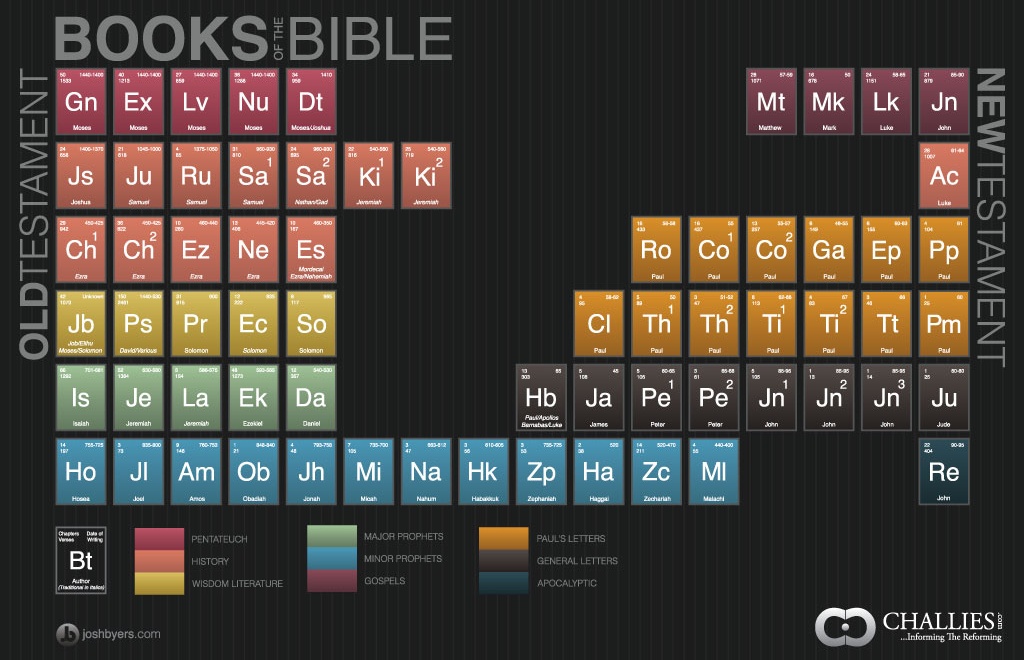
  • The Beacon. Stephen Rodgers has been working hard to present a series on the Books of the Bible (BOB) on the beacon newsletter. Please check it out because it is well done and will get you more familiar with God’s Word.
  • Flocks. Don’t forget to sign up for the regional flocks, which meet monthly in various homes around the community. Visit the table in the foyer between services for more information.
  • Membership Class. We will be offering our next membership class on November 12 (9:00am-12:00pm) and November 13 (1:00-4:00pm) at the church. You must attend both classes. Please let Pastor Patrick know if you are interested in membership to receive an application.
  • Members Meeting. There is a members meeting on Sunday, October 16, from 4:45-8:30pm. All members of LBC are highly encouraged to attend. As always, dinner will be provided.

UPCOMING EVENTS

  • Men’s Breakfast. This Saturday at 8:00am, we will be having a men’s breakfast at the church. Come out for some great fellowship and training. Bring a breakfast item to share! Juice will be provided.
  • Women’s Ministry Seminar. The women’s seminar, entitled “Pursuing Holiness in a Fallen World,” will be on Saturday, October 15, from 9:00am-12:30pm, at the church. There is no cost to attend and breakfast will be provided. All ladies high school age and up are invited to attend. Please sign up with Christine Cho (christinescho@gmail.com).
  • Fall Festival. Our annual Fall Festival will be on October 31 from 5:00-8:00pm. Come dressed up in a costume and enjoy great food and fun! The cost is only $5/person (children 0-12 are free!). Please refrain from wearing any costumes that are evil, scary, or villainous.
  • All-Church Retreat. The All-Church Retreat with Dr. Ernie Baker is quickly approaching. Dr. Baker is a professor of The Master’s College in the biblical counseling department, and he will be presenting a series on biblical conciliation. The cost of the retreat is only $150 ($75/child, ages 3-12; $450/max per family). You can sign up with Ryan Short or Josh Liu with a $50 non-refundable deposit.
AFFINITY GROUPS
  • Single Life Bonfire. The singles ministry will be having a bonfire to kick off the year this Saturday, October 8, from 4:00-9:30pm at Mission Bay (across the street from Belmont Park). Bring $5 for food.
  • Parenting Class. Don’t forget about the Parenting Class meeting on Wednesday evenings from 6:30-8:00pm in Room 107. Nursery care is provided and LKC also meets during the same time.
  • Grace Life Park Day. Grace Life will be having an informal day at Torrey Hills Neighborhood Park on Saturday, October 22, from 11:30am-2:00pm. Bring a lunch for your family and come enjoy some fellowship together while the kids play!

CHILDREN’S MINISTRIES

  • Mommy and Me. If you are a mom who is a regular attendee or member at LBC and are interested in participating in a structured play/learning time for your 0-4 year old child(ren), please contact Jane Kim (janeminkim@gmail.com). Mommy and Me meets on Friday mornings, from 9:45am-12:30pm, at the church.
  • Lighthouse Kids’ Club. LKC meets on Wednesdays from 6:30-8:00pm at the church. Join us as we walk through this year’s theme: “Peacemakers.” Registration is open to children in preschool to fifth grade. The cost is just $30 for the first child, and $20 for each subsequent child of the same household! For more information, or to receive an application form, please contact Josh Liu (liu.joshuac@gmail.com).

MINISTRY OPPORTUNITIES

  • Convalescent Home Ministry. There is a group that visits a convalescent home in the Hillcrest area on Tuesdays to minister to the elderly. Please contact Teddy Yu for more details or if you would like to get involved (yu.teddy@gmail.com).
  • Homeless Ministry. There is a great ministry opportunity available to you every other Sunday! Twice a month, a group goes out to Pacific Beach Presbyterian Church to help feed the homeless and needy. The ministry generally runs from 3:00-6:00pm; the first half is spent preparing the food and the second half is spent serving food and cleaning the kitchen. Contact Joyce Kang for more information on how to get involved with this ministry (joycekang84@gmail.com).

College and the Gospel

by Peter Park

College. What a blessing from God. As I look back at my college years, God has taught me more about Himself and how He works through the lives of His people to accomplish His will. Perhaps the most precious truth that God has taught me over the past 3 years, and is continuing to remind me everyday, is the glorious gospel.

For some reason, the truth of the Gospel, told to its entirety, has never been presented to me where I was challenged by the reality of it. Growing up, all I knew the message to be was that Jesus died on the cross for my sins so that I didn’t have to go to hell when I die. However, coming to LBC, I was challenged to think through our sinful condition and how much it separates us from a holy God who cannot tolerate unrighteousness because of His perfect character. I was challenged to consider not only to make a decision, but to commit myself as a disciple that would be willing to give up everything in order to follow Jesus Christ as Lord (Matthew 10:34-39). This made the gospel message, no longer just a pleasant, convenient message that God loves you and has a wonderful plan for your life. But to follow requires dying to oneself’s former ways and living in perfect submission to the One that has died and was raised on our behalf (Galatians 2:20). The gospel has become so much more precious to me and has become the center-point of my faith, the lens that I see the world through, and the only means through which I can truly rejoice out of a genuine sense of love and praise for our Savior. It is because of the gospel now that I am able to fervently pray, passionately worship in spirit and truth, tirelessly love others, cheerfully serve in ministry, joyfully obey my parents and church leaders, and diligently study knowing that all glory goes to God (Romans 11:36).

I am excited to see another year of what God will do through our ministry. As a collegian approaching the end of my college career, I am looking forward to investing into the younger collegians to make disciples of Christ so that I may be salt and light to a lost and dying world (Matthew 5:13-16) and live for my Lord and master who has commissioned me to make disciples of all nations.

BOB – The Pentateuch

by Stephen Rodgers

Comparative Outline of the Pentateuch

Having briefly dealt with the relevant introductory material, we now turn our attention to the first section of the Bible: the Pentateuch.  “Pentateuch” actually means “five volumes/scrolls” or “book in five parts” and refers to the books of Genesis, Exodus, Leviticus, Numbers, and Deuteronomy.  The Hebrew word for it is “Torah,” although you may occasionally hear it referred to as the “books of Moses” or “the five books of Moses.”  I had a rather alarming moment on a missions trip where someone referred to Exodus as “2nd Moses,” but that could have just been an artifact of translation.

Author & Composition

As is alluded to in the above section, traditional authorship of the Pentateuch has always held that it was written by Moses.  This was relatively undisputed until the 18th century, when some scholars began to challenge the assumption of Mosaic authorship.  While their arguments varied, the gist of it was that several authors (the “Yahwist,” the “Elohist,” the “Deuteronomist,” and the “Priestly writer”) were responsible for writing a number of documents (“J,” “E,” “D,” and “P”) which were edited and spliced together at various times up until approximately 500 BC.

In the late 20th century, this type of critical theory came under massive attack, not just by conservative religious scholars but also by secular textual critics.  While the attacks varied, the gist of it was that such theories are too complicated, self-contradictory, and ultimately unprovable.  Compositional theories have largely been abandoned in favor of disagreements as to when it actually was written, and most scholars currently treat the Pentateuch as a unified document.

However, there are really three areas that we should briefly touch on before moving on:

  1. Biblical support for Mosaic authorship
  2. Potential issues with Mosaic authorship
  3. Compositional issues with the Pentateuch

The Pentateuch itself attests to the fact that the it was written by Moses based on divine revelation (Ex 24:3-7; Lev 1:1; Deut 31:9; 31:24-26).  The Deuteronomy reference is particularly significant as it indicates that the five volumes were compiled as a single book, immediately recognized as Scripture, and often referred to later as a singular, unified book (2 Chron 25:4; 35:12; Ezra 6:18; Neh 13:1; Mark 12:26).  And while we’re on the subject of Biblical support for Mosaic authorship, Jesus Himself stated that Moses was the author (John 5:46; 7:19) and attributed sections of the Pentateuch to Mosaic authorship, including Exodus (Mark 7:10; Ex 20:12; Mark 12:26; Ex 3:6; Luke 20:37; Ex 3:6), Leviticus (Matt 8:4; Lev 13-14; Mark 1:44; Lev 14:3; Luke 5:14; Leviticus 13:8;14:4), and Deuteronomy (Matt 19:8; Deut 24:1-4; Mark 7:10; Deut 5:16; Mark 10:4; Deut 24:1).

There are however, a few places that seem to pose a problem to Mosaic authorship, simply because in places there are sections of text that seem out of place either linguistically (Gen 36:31) or historically (Deut 34:1-12).  While the account of his death has been held by some to be a prophetic account by Moses himself, it is also plausible that it was recorded by someone else (Jewish tradition cites Joshua), and Moses himself  claimed that prophets would succeed him in mediating God’s word (Deut 18:15-20).  Given these possibilities, such “issues” pose no real challenge to Mosaic authorship overall.

Last but not least, it should be mentioned that compositional issues can be at least partially explained by recognizing that Moses himself sometimes wrote from other literary sources, some of which are explicitly identified (Gen 5:1; Num 21:14).  Also, in Ancient Near Eastern (ANE) culture, “authorship” could refer both to someone who actually wrote a particular work, as well as to the person who lent their authority in supporting it. Many Christian scholars would claim that both cases apply to Mosaic authorship of the Pentateuch.

Genre & Context

The Pentateuch includes three different literary genres: narrative, poetry, and law. The laws (numbering 611 or 613, depending on how you count them…the Talmud uses the latter number) account for the majority of the Pentateuch (one statistic claims 68.5%).  The fact that the laws feature so prominently is a fact; exactly what their role is in the life of Christians today has been a theological source of debate for centuries. I’ll touch on that briefly later.

However, it is worth remembering that given the strong case for Mosaic authorship, the context of the Pentateuch is the life of Moses. Genesis provides the necessary background and history for a people who would have been dwelling in a foreign culture for quite some time and needed a reminder. Exodus continues the story and includes the fulfillment of at least one key promise (Gen 50:25; Ex 13:19). Leviticus details the rituals of the tabernacle (which has its construction manual in Exodus) as well as the service for ordaining priests (also originally outlined in Exodus).  Numbers records the journey of Israel from the wilderness of Sinai to Canaan. And Deuteronomy summarizes the previous teachings of Exodus, Leviticus, and Deuteronomy for a new generation of Israelites who weren’t there to hear it the first time around.

I can’t help but take the opportunity to point out that the factual basis for certain “controversial” portions of the Pentateuch were confirmed by Jesus Himself including Adam and Eve (Matt 19:4-5; Mark 10:6-8), Cain and Abel (Matt 23:35; Luke 11:51), Noah and the flood (Matt 24:37-39; Luke 17:26-27), Abraham (John 8:56), Sodom and Gomorrah (Matt 10:15; 11:23-24; Luke 10:12; 17:29), Lot (Luke 17:28-32), Isaac and Jacob (Matt 8:11; Luke 13:28), manna (John 6:31, 49, 58), and miraculous healing (John 3:14).

Theme

I would argue that the central theme of the Pentateuch actually can be summarized in four sub-themes.  And in true MacArthurian style I’m going to alliterate them using the letter “P” (after all, this is for the Pentateuch):

  1. A Promise: In Genesis 12:1-3 God appears to Abraham and made a three-fold promise to give him a land, descendants, and a blessing. This later (Gen 15:7) becomes what we know as the Abrahamic covenant.  The remainder of Genesis deals with the fulfillment of all three promises (which are ultimately fulfilled in Christ…see Gal 3:8,14), but focuses in particular on the “seed” or descendants, which brings us to…
  2. A People: Genesis is the story of the foundation of Israel. Exodus is the story of God rescuing them from Egypt, and the initial giving of the law.  Leviticus expounds on the giving of the law.  Numbers does as well, and highlights both God’s sovereign care and judgment for His people.  This culminates in Deuteronomy with a new generation of Israelites receiving their history and law from Moses.  As you can see, Israel and the law are intertwined, which brings us to the importance of…
  3. The Precepts: The importance of the law really cannot be overstated.  As the first inspired body of Scripture, Israel was to meditate upon it (Jos 1:8), teach it to their children (Deut 6:4-8), and read it publicly (Neh 8:1). Prior to his death, Moses gave explicit instructions as to how the reading of the law would change the hearts of the people of Israel and their relationship with God (Deut 31:12).  This would serve as the right foundation for the OT believer’s relationship with God until the coming of Jesus Christ, which leads us to…
  4. The Prefigured Christ: The NT is clear that the law exists to show us our sin (Gal 3:19-25), that sin is the breaking of the law (Rom 3:19-23), and that Jesus alone perfectly fulfilled the law (Matt 5:17-18). Jesus took our sin upon Himself so that we could be credited with His righteousness and perfect obedience to the law (2 Cor 5:21). What you may not realize though is that Jesus not only fulfilled the law, but that He is foreshadowed throughout the entire Pentateuch as well.  Gordon Wenham said it better than I ever could, so I’ll let him have the last words…

From NT times, Christians have seen the promises in the Pentateuch as finding their ultimate fulfillment in Christ. Jesus is the offspring of the woman who bruises the serpent’s head (Gen 3:15). He is the one through whom “all the families of the earth shall be blessed” (Gen 12:3). He is the star and scepter who shall rise out of Israel (Num 24:17). More than this, many heroes of the OT have been seen as types of Christ. Jesus is the second Adam. He is the true Israel (Jacob), whose life sums up the experience of the nation.

But preeminently Jesus is seen as the new and greater Moses. As Moses declared God’s law for Israel, so Jesus declares and embodies God’s word to the nations. As Moses suffered and died outside the land so that his people could enter it, so the Son of God died on earth so that his people might enter heaven. It was observed that the filling of the tabernacle with the glory of God was the climax of the Pentateuch (Ex 40:34–38). So too “the Word became flesh and dwelt among us, and we have seen his glory” (John 1:14). The goal of the entire Bible is that humans everywhere should glorify the God whose glory has confronted them. Lost sight of in Eden, this goal reappears through Moses, on its way to final fulfillment through Christ.

Other Works Referenced
  • ESV Study Bible, “Introduction to the Pentateuch”
  • MacArthur Study Bible, “Introduction to the Pentateuch”
  • Reformation Study Bible, “Introduction to the Pentateuch”
  • Driscoll, A Book You’ll Actually Read On the Old Testament

The Glorious Gospel (Part 5)

by Pastor Patrick Cho

“Do you want to go to heaven or hell? If you want to go to heaven, all you have to do is believe that Jesus came and died on the cross for your sins. That’s the amazing part! You don’t have to do anything. Jesus did it all for you! Don’t you feel a sense of emptiness in your heart? Nothing in this world will ever be able to fill it. Everything else that we pursue in life falls short. But God can satisfy that longing. He can fill that void completely. Would you like to receive this incredible gift? If you do, all you need to do is pray this prayer after me and Jesus will come into your heart.” Many people today are given a gospel presentation very similar to this one. It’s simple, straightforward, and easy to follow. And who wouldn’t want to believe after hearing a presentation like this? It appeals to the desires of the hearer, and it emphasizes the point that the hearer really doesn’t have to do anything – just believe!

This is what we typically refer to as the easy-believism or free grace gospel. It essentially teaches that a person is saved by God when they profess faith in the tenets of the gospel and make some appeal to God to save them. The emphasis of this evangelistic approach is winning souls by helping people understand the gospel and helping them ask God to save. Most importantly, those who hold to the “easy-believism” philosophy do not believe that repentance is a necessary component of the gospel and do not believe that one must submit to the lordship of Jesus Christ in order to be saved. This is something that is done subsequent to salvation if the person so chooses to make such a commitment to God, but belief is all you need to be saved.

The danger of the easy-believism gospel is that it oftentimes leads to shallow, fake professions of faith leaving people thinking they are saved when they are really not. They go on to believe they will go to heaven (and are warned not to doubt it!) even though they do not show any evidence of salvation in their lives. Jesus said that it is difficult to enter into the kingdom of God. It is easier for a camel to go through the eye of a needle than for a rich man to enter into the kingdom of God (Mark 10:23-25). Why would He have said these things if faith really is as easy as some say?

Looking at the issue biblically, we come to see that repentance and faith are completely inseparable. There are times when the Bible shows that we need to believe in order to be saved (John 3:16). There are times when the Bible shows that we need to repent in order to be saved (Mark 6:12; Acts 3:19). And in Mark 1:15, Jesus brings the two terms together (cf. Paul in Acts 20:21). The reason for this is that you can’t have one without the other.

Repentance is the act of turning from our sins. Those who demonstrate true repentance exhibit genuine remorse for their sin against God and turn from their sin. Faith is the act of turning towards God, but you can’t turn to God unless you turn around first. This is because the direction of our sin is away from God (Rom. 3:11-12; cf. Isa. 53:6). In order to turn to face God, we must turn away from our sin. In this way, repentance and faith are two perspectives of our conversion – two sides of the same coin. Just as faith is a necessary part of the gospel, repentance is also a necessary part of the gospel. This is why Jesus preached a gospel of repentance and He preached a gospel of faith. This is why the Apostles did the same. Whenever faith is spoken of in the Bible, by necessity repentance is implied, and whenever repentance is spoken of, faith is implied.

Some argue against preaching repentance because they say it amounts to teaching salvation by works. They say that preaching repentance is like telling people they need to change in order for God to save them. But the gospel calls for a response. We sometimes forget that both faith and repentance are commanded by God (cf. Acts 16:31; 1 Cor. 1:21; Acts 17:30; Mark 1:15). Not only this, but both faith and repentance are described as granted by God (cf. Eph. 2:8-9; Acts 5:31; Acts 11:18; 2 Tim. 2:24-25). Both are received by a person by the grace of God. Just as God is the one who brings about faith in the unbelieving heart, so God is the one who brings about repentance in the unbelieving heart. Salvation is entirely God’s work.

Biblically, you cannot have one without the other. To call people to follow Christ in faith is to call them to turn from their sins, forsake this world, and submit to Christ. The genuine believer is not just the one who understands the facts of the gospel and believes them to be true. He also understands that the gospel has implications for his life. In Christ, he has a new life, a new allegiance, and a new citizenship. The old passes away and new things come (2 Cor. 5:17). It would be foolish to bank on some experience as the surety of your salvation. Perhaps you prayed a prayer at a retreat as a child, or maybe you walked an aisle during an altar call. The evidence for true saving faith is not the sincerity you felt when you asked Jesus to come into your heart. The evidence of saving faith is the changed life that resulted as the outcome of that confession.

The Love of the Lord

by Charles Haddon Spurgeon

From Hosea 3:1

Believer, look back through all thine experience, and think of the way whereby the Lord thy God has led thee in the wilderness, and how He hath fed and clothed thee every day-how He hath borne with thine ill manners-how He hath put up with all thy murmurings, and all thy longings after the flesh-pots of Egypt-how He has opened the rock to supply thee, and fed thee with manna that came down from heaven. Think of how His grace has been sufficient for thee in all thy troubles-how His blood has been a pardon to thee in all thy sins-how His rod and His staff have comforted thee.

When thou hast thus looked back upon the love of the Lord, then let faith survey His love in the future, for remember that Christ’s covenant and blood have something more in them than the past. He who has loved thee and pardoned thee, shall never cease to love and pardon. He is Alpha, and He shall be Omega also: He is first, and He shall be last. Therefore, bethink thee, when thou shalt pass through the valley of the shadow of death, thou needest fear no evil, for He is with thee. When thou shalt stand in the cold floods of Jordan, thou needest not fear, for death cannot separate thee from His love; and when thou shalt come into the mysteries of eternity thou needest not tremble, ‘For I am persuaded, that neither death; nor life, nor angels, nor principalities, nor powers, nor things present, nor things to come, nor height, nor depth, nor any other creature, shall be able to separate us from the love of God, which is in Christ Jesus our Lord.’

Now, soul, is not thy love refreshed? Does not this make thee love Jesus? Doth not a flight through illimitable plains of the ether of love inflame thy heart and compel thee to delight thyself in the Lord thy God? Surely as we meditate on ‘the love of the Lord,’ our hearts burn within us, and we long to love Him more.

2.4a

Weekly Links (9/30/2011)

When those who claim to be God’s people turn aside from the Word of God and from the Christ of history, this is more heinous in the sight of God than the worst case of infidelity in marriage, for it destroys the reality, the great central bridegroom-bride relationship. I have taken care to emphasize that God does not minimize promiscuity in sexual relationships, but apostasy – spiritual adultery – is worse. And the modern liberal theologian is in that place. How do we look at it? I would suggest we must be careful to look at it no less clearly than God does. Consider the liberal theology of our day. It denies the personal God who is there. It denies the divine historic Christ. It denies the Bible as God’s verbalized Word. It denies God’s way of salvation. The liberals elevate their own humanistic theories to a position above the Word of God, the revealed communication of God to men. They make gods which are no gods, but are merely the projection of their own minds. (Francis Schaeffer, The Church Before the Watching World)

by Stephen Rodgers

Apologies if my indroductions to these articles are a bit briefer than usual.  Don’t let that dissuade you from checking them out though!

Enjoy, and don’t forget that it’s Flocks week!

And don’t forget that this Sunday is communion.  See you at church!

Pro Rege

BOB – The Old Testament

by Stephen Rodgers

Last week’s post went a little bit long and touched on a few issues that were a bit technical.  This week’s post will probably be a bit shorter, and nowhere near as technical.  In fact, I spent part of the day contemplating if I wanted to just make a post with the title What is the OT About? and then write Jesus in the post.

Nothing more.  Just Jesus.

I thought it would make a point…and it would.  But even though that would have definitively gotten the point across, let’s elaborate on it just a bit.

First though, let me point out a couple of articles that deal with other aspects of the OT:  I’ve previously mentioned Vern Polythress’ “Overview of the Bible: A Survey of the History of Salvation” but I’d also like to recommend C. John Collins’ “The Theology of the Old Testament” which takes a broader view.  They’re only a couple pages each, and there’s some great material in there (and if you own an ESV Study Bible, you have those articles already).  But for the purposes of this article, I want to make the point that the central character of the Old Testament is indeed Jesus…even if He never quite directly steps into the spotlight.

It was Mark Dever who once summed up the message of the OT and NT as “Promises Made” and “Promises Kept,” respectively (with Jesus as the primary object of both).  But as much as I respect Pastor Mark, I wouldn’t be comfortable making a claim and then falling back on “well, Mark Dever said so” as my primary justification.  On the other hand, “Jesus said so” carries a little more weight.

You see, it was Jesus who made it absolutely clear that the OT was all about Him! He said it more than once, and in a number of different contexts as well.  He said it before His resurrection (John 5:39-40) and He said it after His resurrection (Luke 24:27). He said it to His disciples (Luke 24:44-45) and He said it to large crowds of strangers (Matt. 5:17-18).  He said it at the beginning of His ministry (Luke 4:20-21) and He said it at the end of His ministry (Luke 22:37; Matt 26:56).

I don’t know about you, but I’ve got this crazy notion that being a “Christian” involves paying attention to Christ.

“Alright Stephen,” you might be saying.  “I believe you that the OT is about Jesus.  I even accept that Jesus said the OT was about Himself.  But can you give me examples of how it’s about Him?”

Yes.  Yes I can.

Prophetic Promises

The OT contains hundreds of prophecies concerning the coming Messiah.  And despite what some skeptics say, there are strong reasons to believe in their validity.  Here are just a few of them:

  • 1,000 BC: David prophesied that lots would be cast for Jesus’ clothes (Ps 22:18; John 19:23-24), that Jesus would be crucified (500 years before the first recorded instance of crucifixion) (Ps 22:16; Luke 23:33), and that Jesus would resurrect from Death (Ps 16:10)
  • 700 BC: Isaiah prophesied that Jesus would be born of a virgin who would conceive by a miracle (Isa 7:14; Matt 1:18-23), that Jesus would die and be buried in a rich man’s tomb (Isa 53:8-9; Matt 27:57-60; Luke 23:46), and that Jesus would resurrect from death (Isa 53:10-12; Acts 2:25-32)
  • 700 BC: Micah prophesied that Jesus would be born in Bethlehem (Mic 5:2; Luke 2:1-7)
  • 700 BC: Hosea prophesied that Jesus’ family would flee to Egypt (Hos 11:1; Matt 2:13-15)
  • 500 BC: Zechariah prophesied that Jesus would be betrayed for 30 pieces of silver (Zech 11:12-13; Matt 26:14-15)
  • 400 BC: Malachi prophesied that Jesus would enter the temple (which was destroyed in 70 AD) (Mal 3:1; Luke 2:25-27)

Christophonies

A “Christophony” is the theological term for an appearance of the pre-incarnate Christ.  You can think of these almost as “cameos” of Jesus, before we fully learn about who He is.  These include:

  • Walking with Abraham (Gen 18; John 8:56)
  • Wrestling with Jacob (Gen 32:30)
  • Appearing to Moses (Ex 3:2-6; John 8:58)
  • Joining Daniel in the fiery furnace (Dan 3:24-25)
  • Calling Isaiah into ministry (Isa 6:1-5; John 12:41)
One special Christophony that can be a little confusing is the appearance of “the angel of the LORD.”  I say “confusing” because not all angels are Jesus, but occasionally one shows up who is explicitly identified as God (Judg 6:11-14; 13:22).  Unlike other occasions, when people try to worship this “angel” (remember that “angel” just means “messenger) they are encouraged instead of corrected.  This is the same “angel” that provided the sacrifice in place of Isaac (Gen 22:1-19) and journeyed with Moses (Ex 3:14; 23:20-21; John 8:56-59)

Types

The aforementioned Vern Polythress defines a “type” as a special example, symbol, or picture that God designed beforehand, and that he placed in history at an earlier point in time in order to point forward to a later, larger fulfillment.  Sometimes a “type” is also called a “prefigure” or a “shadow.” These can be shown through individuals and institutions, services, and events.

  • Some individuals and institutions would be how Adam points to Christ as the second Adam, how the priesthood points to Christ as the High Priest, how David and the other kings point to Christ as the King of Kings, how Moses and the prophets point to Christ as the ultimate Prophet, animal sacrifices which point to Christ as the Lamb of God, the temple which points to Christ as God dwelling among us bodily in Jesus, shepherds who point to Christ as the Great Shepherd and many more.
  • Some services would be how Christ was the better Adam, the better Abel, the better Abraham, the better Jacob, the better Joseph, the better Moses, the better Job, the better David, the better Jonah, the better Boaz, the better Nehemiah, the better Hosea, and many more.  For more explanation of that, you might want to start with a short youtube video of an excerpt from a sermon by Tim Keller.
  • Some events would be the exodus as a pattern for salvation, and Yom Kippur as a pattern for the crucifixion.

Titles

Last but not least, Jesus is identified by a number of OT titles that are used to identify and describe God.  The most prevalent is the title “son of man” from Daniel 7:13-14, which Jesus uses more than 80 times in the four gospels.  Other titles include:

  • Suffering Servant (Isa 42: 1-4; 49:1-7; 52:13-53:12; Phil 2:1-11)
  • First and Last (Isa 41:4; 44:6; 48:12; Rev 1:17; 2:8; 22:13)
  • Light (Ps 27:1; John 1:9)
  • Rock (Ps 18:2; 95:1; 1 Cor 10:4; 1 Pet 2:6-8)
  • Husband/Bridegroom (Hos 2:16; Isa 62:5; Eph 5:28-33; Rev 21:2)
  • Shepherd (Ps 23:1; Heb 13:20)
  • Redeemer (Hos 13:14; Ps 130:7; Titus 2:13; Rev 5:9)
  • Savior (Isa 43:3; John 4:42)
  • Lord of Glory (Isa 42:8; 1 Cor 2:8)

At the beginning of the article I said it would be shorter and less technical than last week.  Well…now it’s longer, and I’ve quoted Polythress, so I probably failed on both counts.  But despite that, I hope you’re beginning to see that the OT is really all about Jesus. Until you understand that, you’re missing the entire point.

Next week we’ll dig deeper into a specific section of the OT as we explore the Pentateuch.  And after that…we’ll dive into an actual book of the Bible: Genesis.

Other Works Referenced

  • ESV Study Bible
  • Dever, The Message of the Old Testament
  • Dever, The Message of the New Testament
  • Driscoll, A Book You’ll Actually Read On The Old Testament

Gray Issues Part 6 – Example: Clothing Standards

by Elder Peter Lim

In my last article, I briefly explained the difference between legalism and standards. There were some statements in that article that I felt would be more clearly understood with an example. Today’s article will make no sense unless you have first read that article. Assuming that you’ve read it, let’s move on to the example.

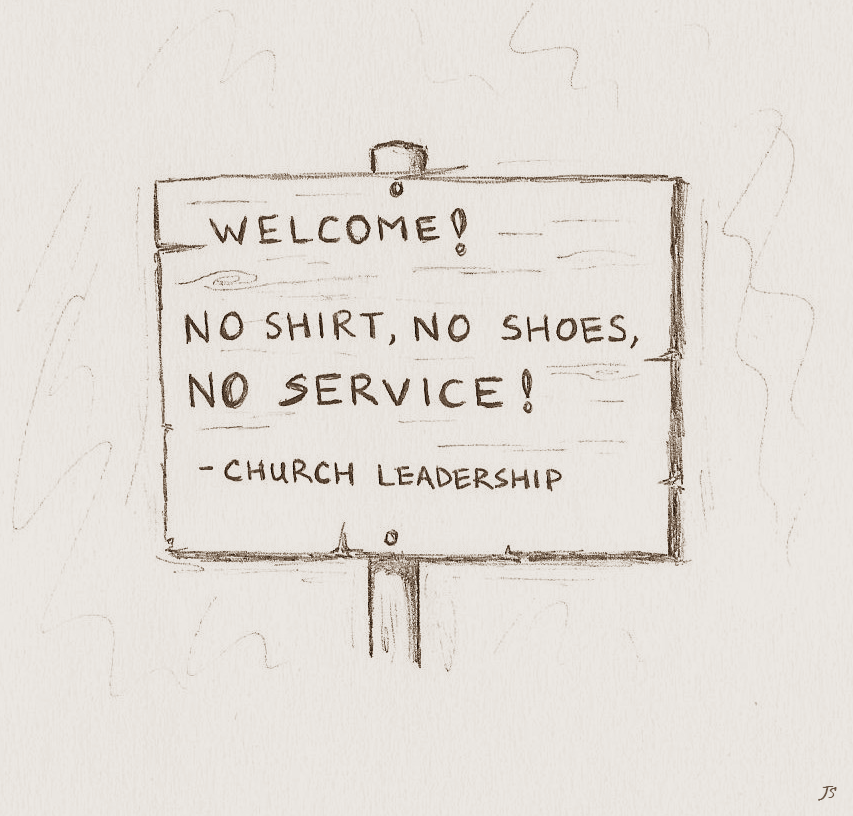
Clothing is a good example of applying legalism or standards in the life of a church. Every church has a dress code. Even the ones who say that they don’t have a dress code have some standard of a dress code. If a man walked into church service with no shirt on, wouldn’t he be asked to put a shirt on so that he would not be distracting to other people? Maybe not, you say? What if it was a woman? Of course they would. So every church has a standard that people be clothed in a particular way. Is this church being legalistic? No, they are simply making the judgment that people ought to wear shirts. There is no verse in the Bible to support this but it is derived from passages that speak of not causing others to stumble, considering one another more important than ourselves, etc.

Each person also has an opinion of how people ought to dress to church. The more conservative ones may even think it to be inappropriate to wear anything less than the “Sunday Best” coat and ties for men and flowery dresses for women. Others in places such as Hawaii and other tropical climates may think that it would be inappropriate to wear suits but rather that people ought to wear shorts and aloha shirts. It’s also interesting to note that sometimes people who would advocate having no dress code for the “normal people” shamelessly endorse a double standard when it comes to how clergy ought to dress.

The leaders also have an idea of what the dress code should be. The difference is, the leaders set the pace for the rest of the church in terms of how the church ought to be represented in their community. They have the responsibility of determining the level of appropriateness of dress. It may not be clearly communicated to the congregation what that level is. If the leaders come up with some sort of a written policy, it may be construed by some to be legalistic.

If a member disagrees what that level should be, how should he deal with this conflict? The Godly man would recall Scripture which reminds him that he is to obey the leaders and let them lead with joy. He wouldn’t make a big deal of his disagreement and try to subvert the leaders’ authority by spreading his poison to other people by “sharing” with them. In fact, a Godly man would halt any such talk if he hears them from others although he may also disagree with the leaders. He does this because he is more concerned with the unity of the body and obedience to Scripture than the furtherance of his own agenda. The assumption here of course is that the leaders have developed such a trust and love of the congregation that they ought to be able to overlook minor disagreements with the leadership.

Now let’s take this example and relate it to other “gray area” topics such as smoking, drinking, gambling, certain kinds of entertainment, etc. While each of these will definitely lead to sin in excess, the true danger of them will actually be felt and experienced long before you get to the “definite sin” stage. This is because sin engages the heart first before anyone (even oneself) can see it. We can see some indications of this when we start justifying our actions by reasoning that there’s no chapter and verse of an explicit prohibition against it instead of considering whether this is truly the best use of one’s time and money in order to maximize God’s glory. Another indicator is when a friend expresses concern about it and we start getting defensive and offended rather than being thankful for their concern. That’s why in the church, we leaders endeavor to stay far away from the “sin cliff” and set standards that are helpful and healthy for the members, and not because we are so concerned with imposing our own standards upon the members. This sometimes presents a dilemma for some members because it seems like the leaders are elevating their own standards into a degree of legalism and making those with “lower” standards feel bad. They misunderstand the leaders’ intentions and lose their focus and turn it into an issue about themselves instead of the bigger picture that the leaders have the responsibility of maintaining for the overall witness of the local church.

The topic of gray issues is clearly not a simple matter that can be settled by precisely defining which activities are sinful and which are not. Such simple thinking reveals the immaturity of one’s thinking. Let’s wrap it up today by concluding that we are to pursue excellence and maturity in our thinking instead of testing how close we can get to the sin border without sinning.

1 Cor. 14:20
Brethren, do not be children in your thinking; yet in evil be infants, but in your thinking be mature.