by Stephen Rodgers
This is the hub post for Richard Shin’s four-part series on communion. From this page, you can easily find and refer to all posts in this series.
All posts in the Understanding the Lord’s Supper series:

by Stephen Rodgers
This is the hub post for Richard Shin’s four-part series on communion. From this page, you can easily find and refer to all posts in this series.
All posts in the Understanding the Lord’s Supper series:
by Charles Haddon Spurgeon
From Ezekiel 33:22
In the way of judgment this may be the case, and, if so, be it mine to consider the reason of such a visitation, and bear the rod and Him that hath appointed it. I am not the only one who is chastened in the night season; let me cheerfully submit to the affliction, and carefully endeavour to be profited thereby.
But the hand of the Lord may also be felt in another manner, strengthening the soul and lifting the spirit upward towards eternal things. O that I may in this sense feel the Lord dealing with me! A sense of the divine presence and indwelling bears the soul towards heaven as upon the wings of eagles. At such times we are full to the brim with spiritual joy, and forget the cares and sorrows of earth; the invisible is near, and the visible loses its power over us; servant-body waits at the foot of the hill, and the master-spirit worships upon the summit in the presence of the Lord. O that a hallowed season of divine communion may be vouchsafed to me this evening! The Lord knows that I need it very greatly. My graces languish, my corruptions rage, my faith is weak, my devotion is cold; all these are reasons why His healing hand should be laid upon me. His hand can cool the heat of my burning brow, and stay the tumult of my palpitating heart. That glorious right hand which moulded the world can new-create my mind; the unwearied hand which bears the earth’s huge pillars up can sustain my spirit; the loving hand which incloses all the saints can cherish me; and the mighty hand which breaketh in pieces the enemy can subdue my sins. Why should I not feel that hand touching me this evening?
Come, my soul, address thy God with the potent plea, that Jesu’s hands were pierced for thy redemption, and thou shalt surely feel that same hand upon thee which once touched Daniel and set him upon his knees that he might see visions of God.
1.6p
by Stephen Rodgers
It’s Friday! And that means that we’re back with another edition of the Weekly Links.
Pro Rege
by Garrett Glende
The doctrine of the Holy Spirit is one of the most confused in modern day Christianity and it is also the focus of this week’s chapter in Wayne Grudem’s Systematic Theology. Perhaps for lack of clear instruction, the Holy Spirit is often misunderstood by many Christians today. There are a variety of ideas floating around, some holding much more merit than others, but we must seek to be true students of Scripture so that we might worship God for who He truly is, especially when it comes to the Holy Spirit. Much of this ignorance may come from the fact that He is simply overlooked much of the time. We like to spend so much time focusing on the work of the Father and the Son (and rightly so) that we miss out on the equally important role of the Spirit. This disproportionate attention has caused Francis Chan to write a book titled The Forgotten God, and many others are beginning to see the tremendous importance of the implications of the Spirit’s work. This week, we’ll focus on the doctrine of the Holy Spirit as seen through His work of empowerment, purification, and revelation (it is important to note that the Spirit’s work of bestowing gifts to the church, although a vital aspect of His ministry, will not be discussed here, as it is addressed in later chapters).
Possibly the most crucial work of the Spirit in the life of the Christian is His work of regeneration. Prior to conversion, the sinner is left utterly helpless in his sin and has no ability to exercise faith and turn to God due to the absence of spiritual life. Man is physically alive, but spiritually dead until the Spirit intervenes (for more on this, see the article on sin). When the Holy Spirit opens the eyes of the sinner and breathes new life into him, we call this the miracle of regeneration. Jesus explains clearly to Nicodemus in John 3 that one cannot see the kingdom of God unless one is born again. Nicodemus is confused by the Jesus’ words and he asks, “How can a man be born when he is old? Can he enter a second time into his mother’s womb?” Jesus goes on to explain to him that it is the Spirit who works in people to bring them new life and that this work will not be seen, but its evidence will be clear: “The wind blows where it wishes and you hear its sound, but you do not know where it comes from or where it goes. So it is with everyone who is born of the Spirit” (John 3:8).
This is the first act of empowerment by the Holy Spirit in the life of the Christian. Following regeneration, the Spirit constantly empowers people for ministry, as we see throughout the Old Testament. The prophets were one group of people who were carried along by the Spirit as they declared God’s word to the masses. Micah writes, “But as for me, I am filled with power, with the Spirit of the Lord, and with justice and might, to declare to Jacob his transgression and to Israel his sin” (Micah 3:8). The prophet Jeremiah had to have been empowered by the Spirit to endure all the hardship that came during his ministry. He suffered under persecution, but he was compelled by the Spirit to continue preaching faithfully. Additionally, David was anointed by the Spirit for the work that God had set before him (1 Sam 16:13). We see that the Holy Spirit was at work in this way throughout the Old Testament, empowering certain people to fulfill the tasks that they were called to.
The Holy Spirit is also particularly at work in the church, purifying its members so that they might build up the body. In addition to providing us with new life, the Spirit works in us so that we might continue to live lives that are pleasing to God. This process of sanctification mentioned by Paul when he writes to the Corinthians, “You were washed, you were sanctified, you were justified in the name of the Lord Jesus Christ and by the Spirit of God” (1 Cor 6:11). The Christian does not only depend on God for salvation, but the day by day growth that comes with it is brought about by the Spirit. The evidence of this work is seen when we exhibit “love, joy, peace, patience, kindness, goodness, faithfulness, gentleness [and] self-control,” the fruit of the Spirit (Gal. 5:22-23). Interesting side note: the passage reads “fruit of the Spirit,” not “fruits of the Spirit.” There’s only one fruit – think about it. This fruit will be manifested when we no longer live according to the flesh, but rather by the Spirit (Rom. 8:12-13). It is by His power that we are able to defeat sin and overcome the temptations that so often befall us.
Lastly, the Spirit is the one who reveals God’s truth. Peter writes that “no prophecy was ever produced by the will of man, but men spoke from God as they were carried along by the Holy Spirit” (2 Pet. 1:21). It is clear that the Holy Spirit is the person who worked within the authors of the Bible so that what they wrote would not be just man’s opinion, but the very word of God. The Holy Spirit revealed God’s word through David: “The Spirit of the Lord speaks by me, his word is on my tongue” (2 Sam. 23:2). As we saw earlier, the prophets were used by the Spirit to bring forth God’s word (Neh. 9:30, Zech. 7:12). All of these different instruments were compelled by God so that the truth about Him might be made known. For us, the Spirit reveals God’s word as we read our Bibles. Surely we are able to understand the Scripture to a certain extent, but without the illuminating work of the Spirit in our devotional lives there will be no real spiritual transformation, only head knowledge.
Knowing that the Spirit is the person who empowers us to live God-honoring lives, what then shall we do? Does this not change the way we approach our times reading the Scriptures, praying, and going to church? We are often so unaware of the mighty power of the Spirit that we go about our daily lives with no dependence on Him at all. We think that we’re able to illuminate the Scriptures, kill sin, and bless the body all by ourselves, but this is not the case. We need to be completely dependent on the Holy Spirit to do His work in us so that our lives might be more pleasing to God. It’s a shame that the evidence of grace is all around us, yet we barely ever notice it. This is one thing that I, myself am trying to work on. An increased sensitivity to the activity of the Spirit in the world should be a prayer request for us all. Jesus tells us that the evidence of the Holy Spirit’s work is just as obvious as the gusts of the wind. Do we see it? Do we listen?
by Elder Peter Lim
I’ve always been a fan of old epic movies such as “Ben-Hur” and “Gone With the Wind.” One of my favorites is “Spartacus” starring Kirk Douglas. It’s the story of a Roman slave who is mistreated and trained to die in a gladiatorial battle. He escapes to form a band of men who try to fight and escape from the tyranny of Roman slavery. Near the end of the movie, the men are captured and the Romans try to find out which one of them is Spartacus and offers to suspend their death sentence in exchange for revealing which one of them is Spartacus since he’s the one who led the revolt. They intend to make an example of him by executing him. Just as Spartacus is about to stand up and announce that he is Spartacus, one of his buddies stands first saying, “I am Spartacus.” Then another of his men stands up to claim that he is Spartacus. Before long, all his men are standing up claiming to be Spartacus. The movie ends with Spartacus and all of his men being crucified on crosses and publicly displayed along the Appian Way. The reason this movie hits me in a particular way is because these men were formerly slaves who would’ve done anything to escape, without caring for anyone else except for themselves. Near the end of the movie, they are willing to die to protect Spartacus because of the kindness and self-sacrificing example he showed. This isn’t a Christian movie and these men are not seeking to glorify Christ in any sense. Even the line “I am Spartacus” is really a lie unless it is Spartacus speaking. But the reason I am moved by this scene particularly is that these men are willing to step up and die because of the inspiration they received from Spartacus.
How much more so when we have a Savior who died the death that we rightfully deserved. This silly movie example hardly compares with the calling from our glorious risen Lord. When Isaiah received his calling as a prophet (Isaiah 6:8) in a vision, God asked the question, “Whom shall I send, and who will go for Us?”, Isaiah replied, “Here am I. Send me.” This enthusiastic answer to His calling came just a few verses after Isaiah cowered in fear because of his sinfulness, upon entering the presence of God. What happened? What transformed him from one who cowers with fear to one who is enthusiastically willing to do God’s work? His unclean lips were touched by the burning coal which symbolizes the purification of God, the atoning work of Christ. He had been cleansed and was now qualified to do God’s work.
He calls us now to evangelize the world. He calls us to that by being members of his body, the church (Eph. 5:30). When our church is in need, it is our role to fulfill whatever needs she has. With our church plant happening just a few weeks from now, the reality of many faithful servants leaving San Diego has definitely begun to show. Many of us are probably getting a little nervous about all the new people who need to step up into roles being vacated by these faithful servants. Fortunately, God has sovereignly given to our church all that we need in order to move forward. People have begun to expand beyond what they were comfortable with and have challenged themselves to serve more and at a greater involvement. But still more opportunities remain. Will you be the one to sacrificially make yourself available to do the Lord’s work? Are you willing to say, “Here am I. Send me?” Or would you rather stay in your comfort zone without being challenged and stretched in order to serve in an area that will definitely cause you to fall on your knees in prayer because you feel so inadequate?
by Charles Haddon Spurgeon
From 1 Peter 5:7
It is a happy way of soothing sorrow when we can feel-‘HE careth for me.’ Christian! do not dishonour religion by always wearing a brow of care; come, cast your burden upon your Lord.You are staggering beneath a weight which your Father would notfeel. What seems to you a crushing burden, would be to Him but as the small dust of the balance. Nothing is so sweet as to
‘Lie passive in God’s hands,
And know no will but His.’
O child of suffering, be thou patient; God has not passed thee over in His providence. He who is the feeder of sparrows, will also furnish you with what you need. Sit not down in despair; hope on, hope ever. Take up the arms of faith against a sea of trouble, and your opposition shall yet end your distresses. There is One who careth for you. His eye is fixed on you, His heart beats with pity for your woe, and his hand omnipotent shall yet bring you the needed help. The darkest cloud shall scatter itself in showers of mercy. The blackest gloom shall give place to the morning. He, if thou art one of His family, will bind up thy wounds, and heal thy broken heart. Doubt not His grace because of thy tribulation, but believe that He loveth thee as much in seasons of trouble as in times of happiness. What a serene and quiet life might you lead if you would leave providing to the God of providence! With a little oil in the cruse, and a handful of meal in the barrel, Elijah outlived the famine, and you will do the same. If God cares for you, why need you care too? Can you trust Him for your soul, and not for your body? He has never refused to bear your burdens, He has never fainted under their weight. Come, then, soul! have done with fretful care, and leave all thy concerns in the hand of a gracious God.
1.6a
by Stephen Rodgers
Hey, it’s Friday! And that means that we’re back with another roundup of some links you won’t want to miss.
See you tomorrow for some words from Spurgeon, and then Sunday at church!
Pro Rege
by Ted Su
The MVP of the NVT
Several months ago, when Pastor John preached on the importance of the MVP (or the Mission, Vision, and Passion) of Lighthouse Bible Church and how it undergirds everything we strive to do in ministry, I was challenged to take it to the test…really, everything? What about the New Visitor’s Team?
The New Visitor’s Team (or NVT) was one of the first ministries I joined when I became a member of Lighthouse almost 6 years ago. Back then I was a second-year medical student eager to be a part of a church where I can grow and serve. The moment I stepped into the church, I was literally surrounded by several members of the team who kindly introduced themselves to me. Later in the new visitor orientation, they reviewed the gospel and went over how to find the right church. It is a day that is still “fresh” in my mind.
Since then, I have become part of the team, led by our coordinator Hwa Park. From welcoming people to church every Sunday morning to providing assistance with parking to leading the new visitor orientation to personally following up with first-time visitors, I have had the opportunity to meet many new faces whom I might not otherwise have gotten to know at our church. Each time I am able to share with a new visitor the reasons I decided to commit to Lighthouse, I am reminded of God’s goodness in giving me a church family I do not deserve.
Over the years, I have seen various changes made within the ministry to improve the way we can serve and minister to both new visitors and members. One thing, however, has remained the same: the commitment of the NVT to the MVP of our church. So, how does the NVT fulfill the MVP of Lighthouse Bible Church?
1. The MISSION of Lighthouse Bible Church: To Make Disciples of Christ (Matt 28:18-20)
2. The VISION of Lighthouse Bible Church: To Plant Churches (Acts 1:8)
3. The PASSION of Lighthouse Bible Church: To Love God and People (Matt 22:37-40)
It has been a real joy and privilege to be able to fulfill the MVP of Lighthouse through this ministry. If you are a member and considering joining the team, I encourage you to contact Hwa Park at hwapark@yahoo.com. Please pray that our team will continue to keep the MVP at the heart of everything that we do, especially as we reach out and interact with each person that comes to our church, all to the glory of God.
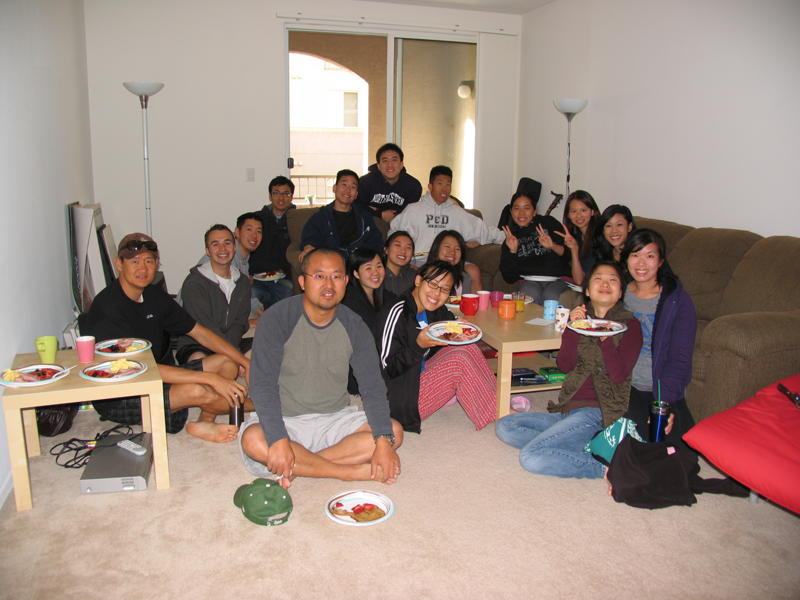
The NVT
by Garrett Glende
The final Christological chapter in Wayne Grudem’s Systematic Theology is on the topic of the offices of Christ. As the story of the Old Testament unfolds, we see that God providentially places people in distinct roles to deal with the nation of Israel. Specifically, these offices can be narrowed down to those of prophet, priest, and king. Each of these offices were shadows of Christ’s work to come, as He would perfectly fulfill each role.
Christ as Prophet
The prophet of the Old Testament was, in essence, the spokesperson for God. He was ordained by God to bring His word to the people. The prophet was the one who made known The Lord to the nation and also the one who orated or scribed God’s law. In the New Testament, Jesus exceeded the work of the prophets of old because He was the One whom the prophecies spoke of in the first place and because He was the divine source of revelation. Not only a messenger of truth, Jesus Himself was truth (John 14:6). He was the “Word became flesh” and the one who fully explained the Father (John 1:1, 14, 18). Moreover, instead of reciting the Law to the people, Jesus incites His own authority in the Sermon on the Mount, using the repeated phrases “You have heard that it was said…but I tell you this.” By doing so, Jesus corrects the crowd’s misunderstanding of the Law by providing His own divine interpretation. Of course, Christ was not merely a prophet, although He fulfilled the role of such. The letter of Hebrews goes to great lengths to show that Jesus was much greater than the prophets, as it proclaims Him as the Son of God and perfect high priest.
Christ as Priest
The same book of Hebrews provides us with a wonderful description of the priestly work of Christ on our behalf. Just as the Old Testament priests were the ones who offered prayers to God for the people and made sacrifices in their place, so does Christ function in this office in an even better way. The bull and goat sacrifices of the Old Testament were never sufficient to atone for sin, but Christ fulfills His role as priest by offering Himself up to God as a perfect sacrifice (Heb. 10:4).This pleasing sacrifice was even attested to by the prophet Isaiah when he writes that Christ’s sufferings are the means by which we are healed, have peace with God, and have been counted righteous in His sight (Isaiah 53:5, 11). Not only has Christ paid the price for our sin in full, He has also been raised and now constantly makes intercession for the saints before the Father (Heb. 7:25). The Old Testament priests often prayed to God on behalf of the people, but as a sinful man, his prayers were not always in line with the will of God. Jesus, knowing the Father’s will perfectly, always prays in accordance with it. For this reason, we can be sure that His prayers are answered and God’s plan is carried out. Grudem cites an encouraging word from Berkhof:
“It is a consoling thought that Christ is praying for us, even when we are negligent in our prayer life; that He is presenting to the Father those spiritual needs which were not present to our minds and which we often neglect to include in our prayers…He is praying that our faith may not cease, and that we may come out victoriously in the end.”
Christ as King
Just as the Old Testament kings ruled over their people, so Christ rules over His church and all of creation. Although the Jews of the day wanted Jesus to come in as a political ruler and establish His authority on earth to overthrow the Romans, Jesus insisted that His kingdom was not of the world (John 18:36). Even though He was truly the king of all men, He did not seek to establish His kingdom in the way that they anticipated. Instead, He would establish a spiritual kingdom, where He would rule first and foremost over the church. We see this principle clearly in Ephesians 1:20-22 where Paul writes that God has “seated [Jesus] at his right hand in the heavenly places, far above all rule and authority and power and dominion, and above every name that is named, not only in this age but also in the one to come. And he put all things under his feet and gave him as head over all things to the church.” This reality will come to full fruition upon Christ’s return and reign on earth when every knee will bow and every tongue will confess His lordship.
Application
As Christians, we are able to model these three offices of Christ in our own lives as well. Both Christ’s priestly and kingly offices can be played out in us, but I want to focus on prophecy here. Our daily lives should be filled with it, as we speak forth God’s word to one another and to unbelievers. One of the greatest forms of encouragement comes from the brother or sister who makes the effort to speak truth into other’s lives. Of course, we are inferior to Christ in this role, but we can, in a broad sense, take part in the proclamation of the gospel to the world. This is a particularly challenging point for me, as it’s often slightly awkward when someone tries to bring up something in Scripture, unless we’re in a context where such a discussion would be normative (small group, church, Bible study). But this shouldn’t be the case. It should be exciting and easy for us to share God’s word with one another, yet our conversation is much more likely to center around the daily news or, in my case, how horrible the Giant’s offense is. But the Giant’s lack of punch at the plate pales in value to the Word of God, which carries with it eternal significance (as well as much more encouragement for me). God’s Word has the power to change people’s lives so that they are able to glorify Him better. This should be our goal in every conversation that we have. Since God’s glory is at stake in all that we do, shouldn’t our aim be to proclaim Him every chance we get? By withholding God’s truth from our fellow brothers and sisters, we devalue its power to change, for if we really did believe it to be so great there would be no hesitation to take part in Christ’s office as prophet.
by Pastor JR Cuevas
Be strong and courageous! Do not tremble or be dismayed, for the LORD your God is with you wherever you go.
~Joshua 1:9
As one might expect, the verses that mean most to me are those verses that strike the very core of my greatest struggles. The biblical texts over which I find myself journaling the longest in daily quiet times with the Lord are the passages that both expose my greatest weaknesses as well as inspire me to wage war against them. In all honestly, courage has never been the strongest asset for me. My walk with the Lord and attempt to run the race of faith has often been beset by a lack of confidence in Him and thus riddled with pessimism. Often have I found myself handcuffed in ministry – and in life in general – because I have often allowed my fears to control me. Though I have done much work on my part to fight it, in light of an up-coming church pland and an up-coming birth of our first child I had recently found myself again wallowing in pessimism. Too many transitions, too many unknowns. Simply put, my lack of trust in God mixed with a number of up-coming transitions has produced a not-so-encouraging attitude to those around me. Resolved I was to fix this, I decided to study the book of Joshua, for the Spirit of God has much to say to those who call themselves followers of God yet do not have confidence in Him.
I realize that far am I from being alone in this struggle. It’s everywhere. It exists in so many good people, and in so many good churches. Many Christians are simply afraid – afraid to lose their comfort, afraid to lose their security, afraid to lose their children, afraid to lose their families, afraid to lose the approval of peers, afraid to lose their lives. The more tragic part is that many have given into these fears. The responses along the lines of, “it’s too difficult,” and “it’s too dangerous” have been so prevalent amongst many whom the Lord has called to do do ministry, and their belief in these responses has prevented many from investing in the kingdom of God. Many would rather flee than fight – they’d rather run away than race. Safety and comfort are premiums in our society, while riskiness and agonizing labor are not.
I can only think that perhaps Joshua was tempted to flee as well, upon God’s commissioning him to lead the Israelites across the Jordan to possess the land that God had promised them. Their great leader – Moses – was dead, and God has chosen Joshua to mobilize the nation to participate in what would be perhaps the most significant battles of their history. A humble man in his own right, Joshua could not have possibly seen himself as the one who would be most fit for the task. And so the Lord commissioned him with these words in Joshua 1:9: “Be strong and courageous!” Anyone who reads Joshua slowly will find that this is a thematic command from the God to Joshua – to be strong and courageous upon faithfully running the course that God had set before him. And in the end, Joshua did what Moses was not able to do – lead the people across the Jordan to possess the land that God had promised them.
Learning from Joshua’s courage is not only inspiring; it is instructive. From him, we see that courage is not oblivious or ignorant over-confidence. Neither is it bravado nor boastful arrogance. Neither is it blind faith nor self-confidence. Rather, courage is the quality of pressing forward towards God and being faithful to His will in the midst of jeopardizing circumstances. It is not the lack of initial fear, but rather having the resolve to both face it and fight fear for the glory of God. Courage is that very virtue that undergirds faith. It is what strengthens the feet of a believer to take the step of faith. Talk to every great champion in any sport, and they’ll tell you that they’re not exempt from fear and pressure – especially if they persevere. But ask any of their competitors, and they’ll tell you that what makes those athletes champions is their unflinching resolve amidst the pressure. The same is true for Christian warriors. While the reality remains that Satan and the world are dangerous opponents, the courageous Christian does not flinch or flee before them. Rather, by the strength and knowledge of God, he valiantly proceeds and fights.
How does one then develop courage? It does not happen over night, but rather is developed over time. All who struggle with fear ought to be disciplined, then, both realization and resolution. Realization – the awareness that God will not forsake His children, nor will He fail them. Courage can never be separated from a knowledge of God – both objectively and subjectively. The most courageous people are those who are aware – aware of God’s power and God’s faithfulness to His people. Courage starts the realization of God’s ability to overcome any and all circumstances and opponents, and continues with the realization of God’s promise to fight for those whom He has chosen. After realization, then, comes resolution – the resolution to step forward and participate in the fight of faith. There is no “secret,” in this sense. One must simply believe, and do. It’s simple – hard, but simple. As I have continued reading through the book of Joshua, I have realized two recurring themes – God’s constant reminding of Joshua that He is with him, and Joshua’s direct obedience of all of God’s commands. May it be the same with me, you, and the church. Let us be aware of God, believe in God, and obey Him in running this rocky yet rewarding race of faith.